Which HVAC Specializations Pay More? A Guide to Refrigeration, Controls, and Chillers
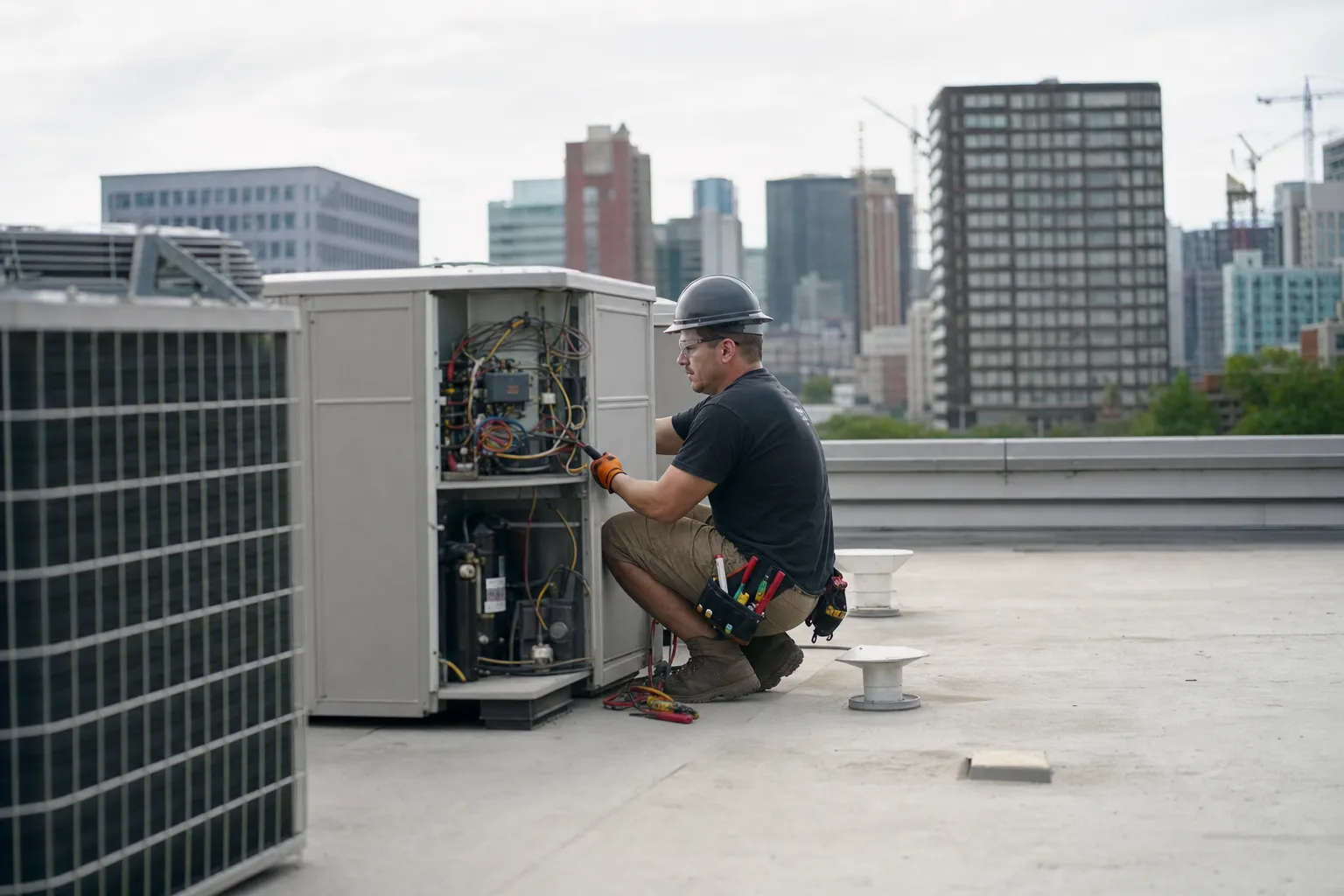
Most HVAC service techs earn somewhere in the $50K to $95K per year range, but where you land inside that band depends heavily on what you can actually service. A tech who only does residential swap-outs sits near the bottom. A tech who can troubleshoot a commercial chiller or program a building automation system sits near the top, and the reason is simple: fewer people can do that work, and the equipment they touch is expensive to leave broken.
If you are already turning wrenches and wondering where the money goes, this guide breaks down three specializations that consistently push HVAC earnings up: refrigeration, controls, and commercial chillers. None of them require you to start over. They build on skills you probably already have.
Why some HVAC work pays more than other HVAC work
Pay in the trades tracks difficulty and scarcity more than hours. The heat never takes a day off, so neither does the work, but not all of that work is valued the same. Two things drive an HVAC tech toward the higher end of the range:
- Downtime cost. When a rooftop unit on a house fails, one family is uncomfortable. When a chiller cooling a hospital or a data center fails, the clock starts on real money and, sometimes, safety. Employers pay more for techs who can keep that equipment running.
- Skill scarcity. Anyone can be trained to change a capacitor. Far fewer techs can read a control sequence, diagnose a refrigerant charge problem, or bring a large chiller back online. Scarcity is what moves you up inside the $50K to $95K band.
The three paths below are the clearest examples of both forces working in your favor.
Refrigeration: the skill that follows the food and the medicine
Refrigeration is the specialization most HVAC techs are closest to without realizing it. You already understand the refrigerant cycle. Commercial and industrial refrigeration just applies it to different loads: walk-in coolers, freezers, supermarket racks, cold storage, and process cooling.
What makes refrigeration valuable:
- It runs year round. A restaurant's walk-in has to hold temperature in January and July. There is no slow season, which means steadier work and steadier pay.
- Failures are urgent. Spoiled inventory is expensive and, for medicine or food safety, non-negotiable. That urgency shows up in what shops can charge and what they pay the people who respond.
- The systems get complex fast. Multi-compressor racks, subcooling, and low-temperature applications are a different animal than a home AC. Techs who master them are hard to replace.
If you like diagnosis and you do not mind emergency calls, refrigeration is one of the most reliable ways to climb toward the top of the HVAC pay range.
Controls: where HVAC meets the building's brain
Building controls, sometimes called building automation, is the fastest-growing high-pay corner of HVAC. Modern commercial buildings do not run on simple thermostats. They run on networked control systems that stage equipment, track sensors, and optimize energy use across an entire facility.
Controls work rewards a different kind of tech:
- You are part mechanic, part troubleshooter of logic. Instead of only turning wrenches, you are reading sequences of operation, checking sensor inputs, and figuring out why a system is behaving the way it is.
- It is less physically punishing. A lot of controls work is diagnosis and programming, which extends the years you can stay productive in the trade.
- Demand keeps rising. As buildings get more efficient and more connected, the number of techs who can actually service the controls has not kept up. That gap is what pushes pay upward.
If you are the person who likes to understand why a system does what it does, not just what part failed, controls may be the specialization that fits you and pays for the curiosity.
Commercial chillers: the top of the mechanical ladder
Commercial chillers are the large machines that cool big buildings: hospitals, offices, universities, manufacturing plants, and data centers. Servicing them is often considered the peak of the mechanical side of HVAC, and the pay reflects it.
What sets chiller work apart:
- The stakes are high. A single chiller can be responsible for cooling an entire facility. Techs trusted to maintain and repair them carry real responsibility, and employers compensate accordingly.
- It combines everything. Chiller work pulls in refrigeration knowledge, controls knowledge, electrical understanding, and mechanical skill. It is where the other specializations meet.
- The learning curve is real. You do not start on chillers. You grow into them, usually after building a foundation in service, refrigeration, or controls. That long runway is exactly why the work stays scarce and well paid.
For a tech planning a long career, chillers are a destination worth aiming at.
How to move toward higher-paying HVAC work
You do not have to pick one path today. The smart move is to keep taking the work that stretches you and to be clear with employers about the direction you want to grow. A few practical steps:
- Say yes to commercial calls. Exposure to racks, controls, and larger equipment is how you build the resume that gets you into specialized roles.
- Learn the logic, not just the parts. Techs who can explain a sequence of operation stand out immediately.
- Track what you can service. When you talk to a shop, the difference between "I do residential service" and "I troubleshoot controls and commercial refrigeration" is the difference between the middle and the top of the $50K to $95K range.
HVAC is not the only trade where specialization pays. For comparison, journeyman electricians typically land in the $62K to $125K range and journeyman plumbers in the $60K to $130K range, so the pattern holds across the trades: the more specialized and harder to replace you are, the higher you climb.
When you are ready to find work that matches the level you are at, you can get matched with local shops that are hiring for the specialization you want. You tell us what you actually do, and we introduce you to employers in your area. You can also read how HyprStart works before you start. The service is free for the worker; shops pay a placement fee only if they hire you.
Frequently asked questions
Which HVAC specialization pays the most?
Commercial chiller work is generally considered the top of the mechanical side of HVAC because it combines refrigeration, controls, electrical, and mechanical skill on high-stakes equipment. Refrigeration and building controls also push you toward the top of the typical HVAC range of $50K to $95K per year.
Does refrigeration pay more than regular HVAC?
Refrigeration tends to sit toward the higher end of the HVAC pay range because the work runs year round, failures are urgent, and the systems get complex quickly. Commercial and industrial refrigeration techs are harder to replace, which is what moves pay up.
What are HVAC controls and why do they pay well?
Controls, or building automation, is the networked system that runs equipment in commercial buildings. It pays well because demand for techs who can read control sequences and troubleshoot the logic has outpaced supply, and the work is less physically demanding, which extends your career.
How much do HVAC techs make?
HVAC service techs typically earn in the $50K to $95K per year range. Where you land inside that band depends on what you can service, with specializations like refrigeration, controls, and commercial chillers pushing you toward the top.
Do I need to start over to specialize in HVAC?
No. Refrigeration, controls, and chillers build on skills most HVAC techs already have. The path is usually to take on commercial work, learn the logic behind the systems, and grow into more specialized roles over time.
Does it cost anything to use HyprStart to find HVAC work?
No. HyprStart is free for the worker. You tell us what you do and we introduce you to local shops that are hiring. Employers pay a placement fee only if they hire you.
Ready to get introduced, not ghosted?
Tell us what you do. We put you in front of local shops that are hiring. Free to apply.
Get matched →