Residential vs Commercial vs Industrial Trade Work: A Guide to Pay, Schedule, and Fit
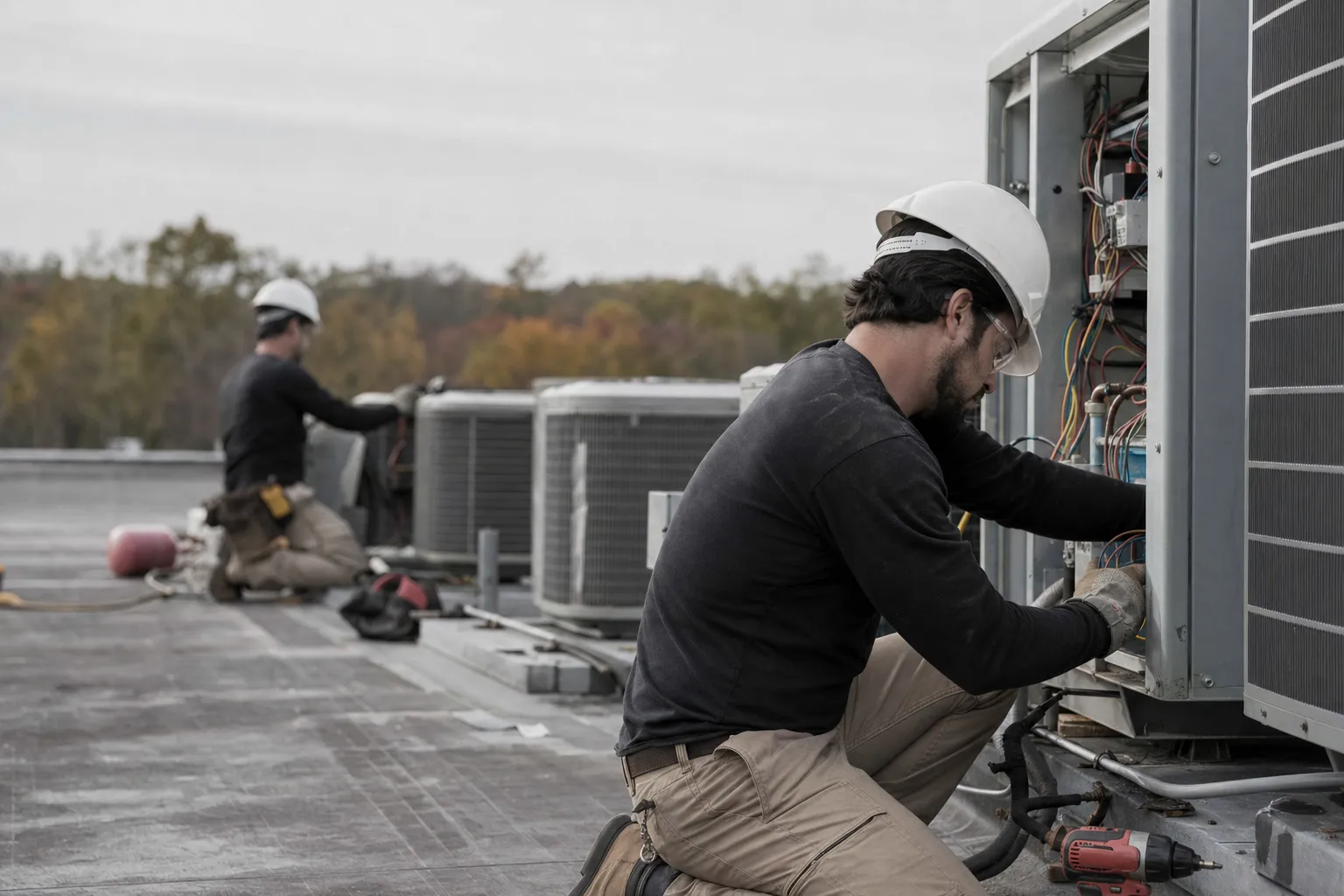
Two techs with the same license can have completely different workdays. One is in a different house every couple of hours talking to homeowners. The other spends three months wiring a single warehouse. Same trade, same paycheck range on paper, very different jobs. If you work in HVAC, electrical, or plumbing, the setting you choose shapes your schedule, your commute, your customers, and how your day feels more than the trade itself does.
Here is how residential, commercial, and industrial work actually differ, and how to figure out which one suits you.
The three settings, in plain terms
Residential means houses, condos, and small multi-family buildings. You are in and out of homes, often solo or in a two-person crew, doing service calls, repairs, replacements, and remodels. You talk to the homeowner directly.
Commercial means offices, retail, restaurants, schools, and other occupied buildings that are not homes. The jobs are bigger, the systems are larger, and you usually work as part of a crew coordinating with a general contractor or a building's maintenance staff.
Industrial means plants, factories, refineries, water treatment, and heavy facilities. This is the largest scale work with the most complex systems, the strictest safety rules, and the most specialized skills. Projects can run for months, and shutdowns often happen on nights or weekends when a plant can pause production.
Pay: what the trade sets, and what the setting shifts
Pay is driven first by your trade and your credential, then adjusted by setting, experience, region, and overtime. These are typical national market ranges, not a HyprStart offer or a guarantee:
- HVAC service tech: $50K to $95K per year
- Electrical journeyman: $62K to $125K per year
- Plumbing journeyman: $60K to $130K per year
Notice how wide each band is. A big part of that spread is the setting and the overtime that comes with it.
- Residential tends to sit in the lower to middle part of the range for a given trade, but strong service techs who close a lot of work, handle emergency calls, or earn commission on replacements can push higher.
- Commercial often lands in the middle to upper part of the range, with steadier hours and prevailing-wage projects that can lift pay.
- Industrial frequently reaches the top of the range, largely because of the specialized skills, the safety demands, and the overtime that shutdown and turnaround work generates.
The headline number matters less than how you get there. Residential can pay well through volume and commission. Industrial can pay well through overtime and skill premiums. Commercial tends to pay well through consistency.
Schedule and lifestyle
This is where the three settings really split, and it is often the deciding factor.
Residential
- Multiple job sites in a day, so more driving and more short stops.
- On-call and emergency work is common. A furnace out in January or a burst pipe does not wait.
- More weekend and evening calls, but also more flexibility on some days.
- You are the face of the company to the customer, so communication matters as much as your wrench skills.
Residential suits people who like variety, do not want to be on one site for weeks, and are comfortable talking to customers all day.
Commercial
- Fewer sites, longer stretches at each one.
- More predictable daytime hours on many projects, though occupied buildings sometimes push work to nights so tenants are not disturbed.
- More crew-based work and coordination with other trades.
- Less direct customer contact, more working off plans and specs.
Commercial suits people who want a steadier rhythm, like working with a crew, and prefer larger systems over quick service calls.
Industrial
- Long projects and scheduled shutdowns that can mean stretches of heavy overtime.
- Nights, weekends, and turnaround periods when a facility pauses to let maintenance happen.
- The strictest safety culture of the three, with detailed procedures and permits.
- The most specialized equipment and the deepest technical demands.
Industrial suits people who want maximum earning potential through overtime, do not mind irregular or intense schedules, and like mastering complex systems.
Skills and how you move between settings
Your core trade skills carry across all three, but each setting rewards different strengths.
- Residential rewards speed, diagnostics, and customer trust.
- Commercial rewards blueprint reading, code knowledge for larger systems, and crew coordination.
- Industrial rewards specialized certifications, safety discipline, and comfort with heavy or high-stakes equipment.
Many techs start in residential because the learning cycle is fast and you see a huge variety of problems quickly. Others start commercial or industrial through an apprenticeship tied to a larger contractor. You are not locked in. Plenty of people move from residential service into commercial for the steadier hours, or into industrial for the overtime money, once they build the right skills and credentials.
How to figure out which one fits you
Ask yourself a few honest questions:
- Do you like variety or focus? Residential gives you a new problem every couple of hours. Industrial gives you one big problem for weeks.
- How do you feel about talking to customers? Residential is people-facing. Commercial and industrial are more crew and plan facing.
- What matters more, predictable hours or maximum overtime? Commercial leans predictable. Industrial leans toward big overtime swings. Residential sits in between with emergency calls.
- How far are you willing to drive? Residential means many short trips. Commercial and industrial usually mean one site for a long stretch.
- What is your body telling you? All three are physical, but the scale of equipment and the pace differ. Be realistic about what you want your day to feel like in ten years.
There is no best answer. The best setting is the one that matches how you actually like to work, because that is what keeps you in the trade long term.
Where HyprStart fits
Most job listings do not make the setting clear until you are already interviewing. That is a waste of your time if you know you want, say, commercial hours and not residential on-call work. HyprStart flips that. You tell us the trade you do and the kind of work you want, and we introduce you straight to local shops that are hiring for it. You can get matched with local shops that fit the setting and schedule you are after, instead of guessing from a job title.
The service is free for you. Employers pay a placement fee only if they hire you, and you never pay anything. If you want the full picture before you start, here is how HyprStart works.
Pick the setting that fits your life, not just the biggest number on the posting. The right fit is what makes the paycheck worth it.
Frequently asked questions
Which pays more, residential, commercial, or industrial work?
It depends on your trade, experience, and overtime, but industrial work often reaches the top of a trade's pay range because of specialized skills and shutdown overtime. Commercial tends to land in the middle to upper part with steadier hours, and residential often sits lower to middle unless you earn commission or handle heavy emergency work. As market ranges, HVAC service techs typically earn $50K to $95K per year, electrical journeymen $62K to $125K, and plumbing journeymen $60K to $130K.
What is the difference between residential and commercial trade work?
Residential work is in houses and small multi-family buildings, usually solo or in small crews, with lots of short service calls and direct customer contact. Commercial work is in offices, retail, schools, and similar buildings, with bigger systems, longer stretches at one site, more crew coordination, and often more predictable daytime hours.
Which setting has the best schedule?
Commercial work is often the most predictable, with more daytime hours on many projects. Residential has more emergency and on-call work but some day-to-day flexibility. Industrial can mean heavy overtime during shutdowns and turnarounds, which is great for earnings but harder on your schedule.
Can I switch from residential to commercial or industrial later?
Yes. Your core trade skills carry across all three settings. Many techs start in residential for the fast learning cycle, then move into commercial for steadier hours or industrial for overtime pay once they build the right skills and credentials for the larger systems and safety demands.
Is industrial work worth the harder schedule?
For people who want maximum earning potential and enjoy complex systems, often yes, because industrial frequently reaches the top of a trade's pay range through overtime and skill premiums. But it comes with the strictest safety rules and irregular, sometimes intense schedules, so it fits best if you do not mind nights, weekends, and turnaround stretches.
Does HyprStart cost anything to use?
No. HyprStart is free for trades workers. You tell us your trade and the kind of work you want, and we introduce you to local shops that are hiring. Employers pay a placement fee only if they hire you, and the worker never pays anything.
Ready to get introduced, not ghosted?
Tell us what you do. We put you in front of local shops that are hiring. Free to apply.
Get matched →