OSHA 10 vs OSHA 30: Which Card Do Trade Employers Actually Want?
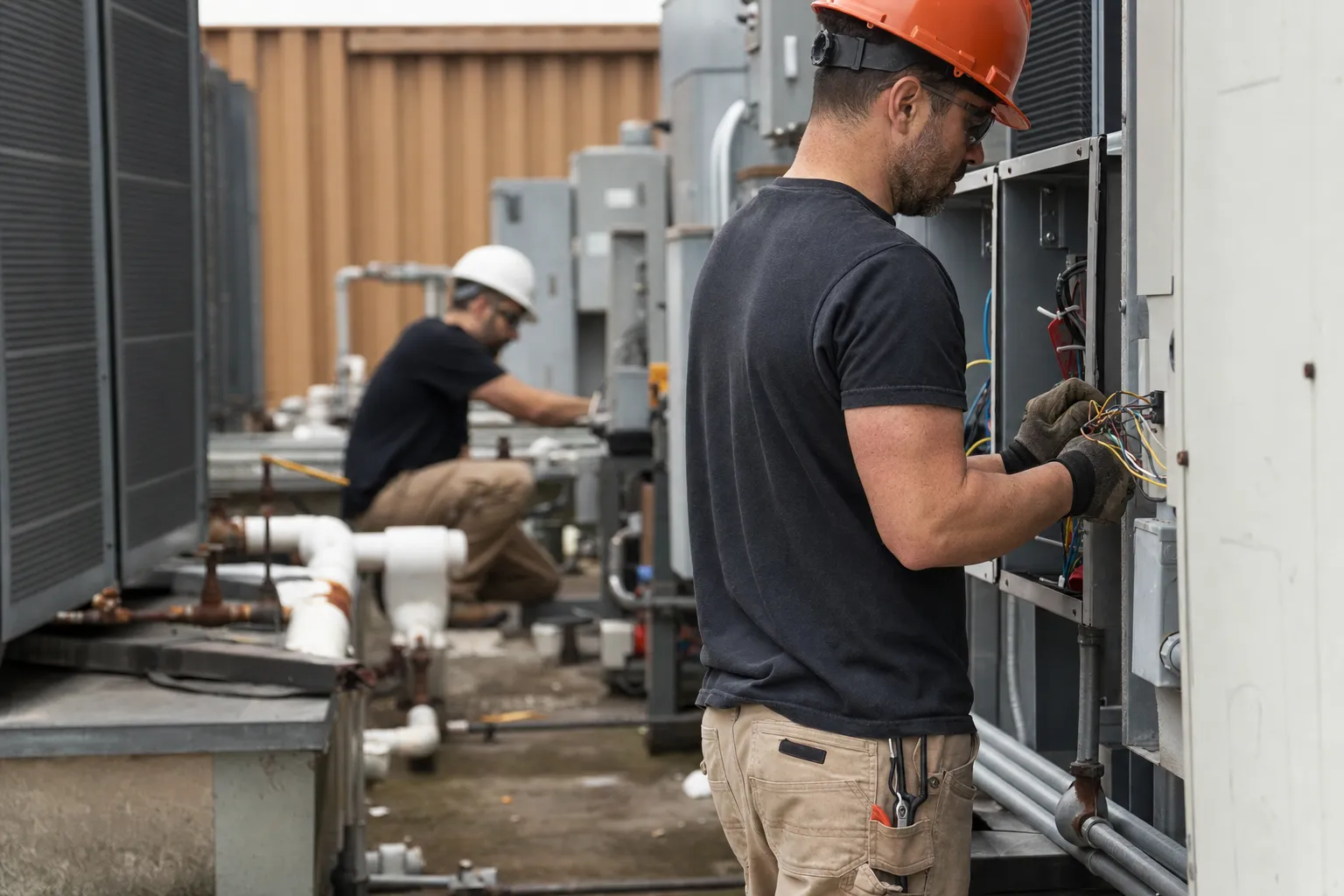
Walk into any job interview for HVAC, electrical, or plumbing work and one of the first questions is often about safety training. Many employers list an OSHA card as a line item on the application, and a lot of workers show up unsure whether they need the 10 hour or the 30 hour version. The two are not interchangeable, and getting the wrong one can cost you time and a little money.
Here is the short answer, then the detail behind it.
What OSHA 10 and OSHA 30 actually are
Both are voluntary training courses developed under OSHA's Outreach Training Program. Neither is a license, and neither by itself lets you do a specific task on a job. They are awareness courses. You learn how to recognize, avoid, and report common hazards on a work site, and at the end you receive a wallet card.
The main difference is depth and audience.
- OSHA 10 is a 10 hour course aimed at entry level workers. It covers the basics: hazard recognition, workers' rights, employer responsibilities, and how to file a complaint.
- OSHA 30 is a 30 hour course aimed at workers with some safety responsibility, such as foremen, lead techs, and supervisors. It goes deeper into managing hazards, not just spotting them.
Both come in a Construction track and a General Industry track. For most field trades work you want the Construction version, but check the job posting, because some facility and maintenance roles ask for General Industry.
Which one do employers actually ask for
It depends on the role and, in some regions, on local rules.
For a worker coming in as a helper, apprentice, or newer service tech, an OSHA 10 Construction card is usually enough to satisfy the box on the application. It signals you understand basic site safety, which is what a shop wants from someone who is not yet running a crew.
OSHA 30 tends to come up when you are moving toward a lead or supervisory role, or when a general contractor requires it for everyone on a specific commercial or public project. Some larger commercial job sites require the 30 hour card for supervisors and the 10 hour card for the rest of the crew. If you plan to run work, take the 30.
A practical way to decide:
- Applying for a helper or apprentice spot: get OSHA 10.
- Applying for a journeyman spot where you may lead a small crew: OSHA 10 covers you, but OSHA 30 makes you more competitive.
- Aiming for foreman, lead tech, or project supervisor: get OSHA 30.
When in doubt, read the job description word for word. If it names a specific card, get that one. If it just says "OSHA certified" without a number, an OSHA 10 Construction card is the safe default and the cheaper starting point.
Why the card is worth the cost in the trades
Skilled trades pay well and the pay climbs as you take on more responsibility. Nationally, HVAC service techs typically earn in the range of $50K to $95K per year. Electrical journeymen typically land around $62K to $125K per year, and plumbing journeymen around $60K to $130K per year. Those are market ranges, not a promise, and where you fall inside them depends on your skills, your role, and your local market.
The reason safety training matters to that number is simple. The higher paying end of each range usually goes to people trusted to run work, and running work often means holding the 30 hour card. So the card is not just a checkbox. It is one of the small credentials that helps you move from the middle of a pay range toward the top of it.
How to get an OSHA 10 or OSHA 30 card
You have two main paths.
In person training
An authorized OSHA Outreach trainer runs a classroom course. Many trade schools, union halls, community colleges, and some employers offer these. The upside is you can ask questions and the schedule is set for you. OSHA 10 is spread over a couple of days and OSHA 30 usually runs several days.
Online training
OSHA authorizes online providers to deliver both courses. This is the flexible route. You work at your own pace and the training tracks your hours, because OSHA requires the full 10 or 30 hours of seat time. That is why you cannot rush an online course to finish in an hour. If a site promises an instant card with no real training time, avoid it. A card from an unauthorized provider is not a real OSHA card.
A few things to know before you pay:
- Use an OSHA authorized provider. Legitimate providers state their authorization clearly.
- Expect to receive a plastic wallet card by mail after you finish. The temporary certificate you print at the end holds you over until it arrives.
- The card does not expire under federal rules, but many employers and job sites ask for training completed within the last few years, so some workers refresh it. Check what your target employer expects.
OSHA card versus your trade license
Do not confuse the two. An OSHA card is safety awareness training. It does not replace the licensing or certification your trade requires, such as an electrical or plumbing journeyman license or HVAC certification. You need both for many roles: the trade credential to do the work, and the OSHA card to be allowed on the site. The OSHA card is usually the faster and cheaper of the two to earn, which is why it is a smart early move if you are trying to get in the door.
The order that makes sense for most people
If you are early in your trade and trying to get hired, this sequence works well:
- Earn your OSHA 10 Construction card first. It is quick, inexpensive, and satisfies most entry level postings.
- Get hired and build hours toward your trade license or certification.
- When you start heading toward a lead or supervisor role, add OSHA 30.
That keeps your spending in line with where you actually are, instead of paying for the 30 hour course before any job requires it.
Once you have the card in hand, the next step is getting in front of shops that are hiring. That is the part HyprStart handles. You tell us what you do, and we introduce you straight to local shops looking for your trade. You can get matched with local shops without paying anything, since employers cover the placement fee only if they hire you. If you want the full picture first, here is how HyprStart works.
Get the right card for the role you want, keep your trade license current, and let the introductions do the legwork.
Frequently asked questions
Is OSHA 10 or OSHA 30 better for getting hired in the trades?
For most entry level and mid level trades jobs, OSHA 10 is enough to satisfy the safety requirement on an application. OSHA 30 becomes better, and sometimes required, when you are moving toward a lead, foreman, or supervisor role, or when a specific commercial job site requires it. Read the job posting: if it names a card, get that one.
Does an OSHA 10 or OSHA 30 card expire?
Under federal OSHA rules the card does not expire. However, many employers and job sites ask for training completed within the last few years, so some workers refresh it. Check what your target employer or the specific job site expects before assuming an older card will be accepted.
Can I take OSHA 10 or OSHA 30 online?
Yes. OSHA authorizes online providers for both courses. You must complete the full 10 or 30 hours of training time, so any site promising an instant card with no real training is not legitimate. Use an authorized provider and you will receive a plastic wallet card by mail after finishing.
Should I get the Construction or General Industry version?
For most field trades work in HVAC, electrical, and plumbing, the Construction track is the right choice. Some facility and maintenance roles ask for the General Industry track instead. Check the job posting, and when it does not specify, Construction is the common default for trades field work.
Does an OSHA card replace my trade license?
No. An OSHA card is safety awareness training and does not replace the license or certification your trade requires, such as an electrical or plumbing journeyman license or HVAC certification. Many roles require both: the trade credential to do the work and the OSHA card to be allowed on the site.
How does the OSHA card connect to how much I can earn?
The card itself is not a pay raise, but the higher end of trade pay ranges usually goes to people trusted to run work, which often means holding the 30 hour card. Nationally, HVAC service techs typically earn $50K to $95K, electrical journeymen $62K to $125K, and plumbing journeymen $60K to $130K per year. Those are market ranges, not guarantees.
Ready to get introduced, not ghosted?
Tell us what you do. We put you in front of local shops that are hiring. Free to apply.
Get matched →