HVAC Service vs Install: Which Side of the Trade Fits You?
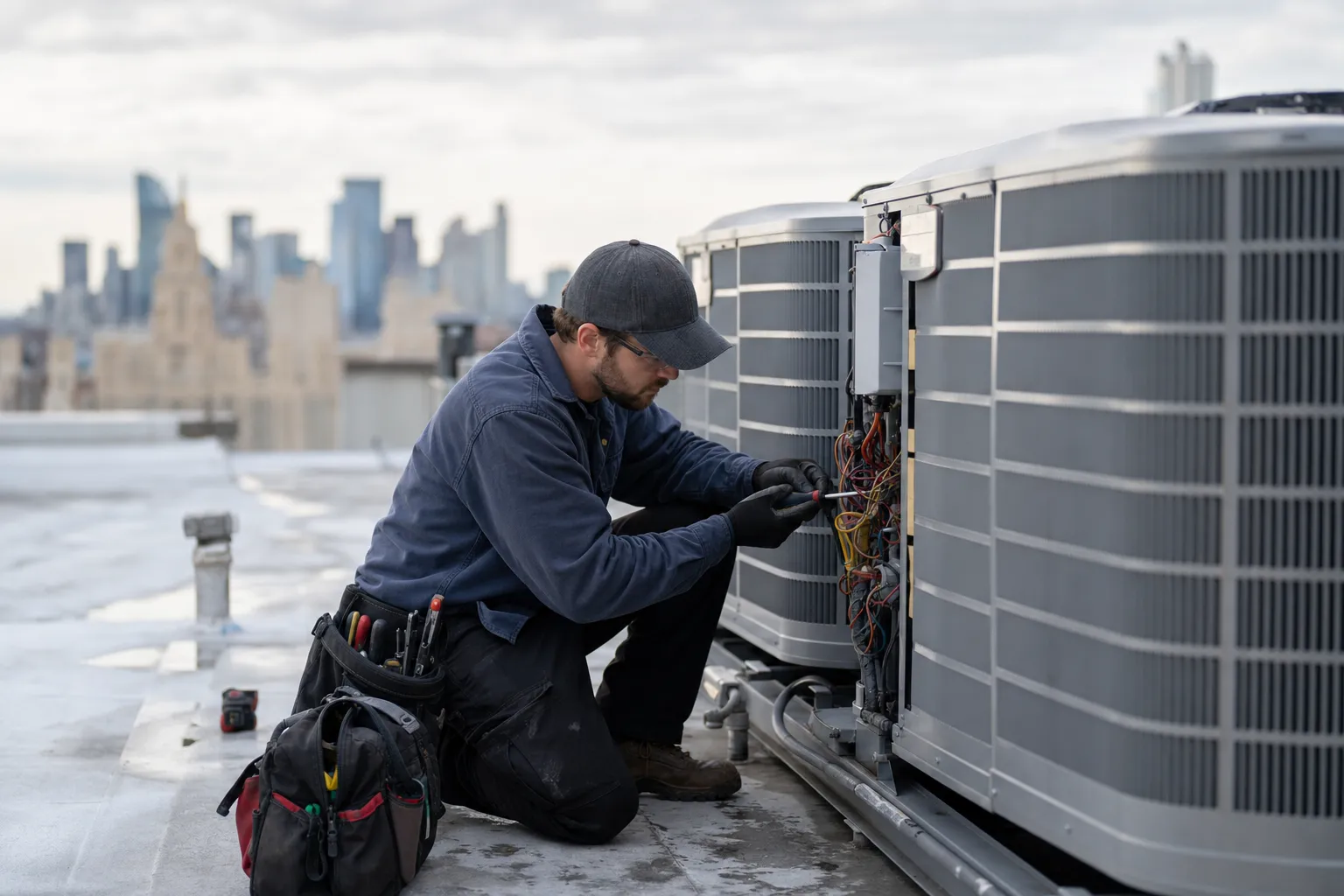
Ask two people who both call themselves HVAC techs what they did yesterday, and you can get two completely different answers. One spent the day diagnosing a system that would not cool, chasing a wiring fault, and explaining the fix to a homeowner. The other spent it lifting new equipment into place, running lineset, and getting a fresh system commissioned. Same job title. Very different work.
If you are looking at HVAC as a career, or you are already in it and deciding where to specialize, understanding the split between service and install is one of the most useful things you can do. It shapes your daily routine, the skills you build, the tools you carry, and how you move up.
The two jobs behind one title
HVAC as a field covers install, service, refrigeration, and controls. The heat never takes a day off, so neither does the work. Most shops organize their field staff around two main tracks: install and service. Some techs cross over, but the day to day is distinct enough that people usually lean one way.
Install is about putting new systems in. That means new construction, replacements, and retrofits. You are moving equipment, setting condensers and air handlers, running duct and refrigerant lines, making electrical connections, and getting the system charged and running.
Service is about keeping existing systems alive. That means diagnosing failures, repairing components, doing maintenance, and fielding calls when something quits. You are the person who shows up when the house is 85 degrees inside and the owner wants to know why.
Both are essential. A shop needs installers to grow its base of equipment out there, and it needs service techs to maintain that base and generate repeat business.
What an install day actually looks like
Install work is physical and project-based. You often know the plan before you arrive: this system comes out, that one goes in. There is a rhythm to it.
- Heavy lifting and staging of equipment
- Sheet metal and ductwork
- Brazing and running refrigerant lines
- Electrical hookups and thermostat wiring
- Pulling a vacuum, charging the system, and commissioning
Install tends to run in crews. A lead installer directs, and helpers handle the labor while learning. Because the work is planned, your day is more predictable. You are less likely to get a surprise call that blows up your schedule. The tradeoff is that it is harder on the body over time, and the variety day to day can be narrower.
For someone new to the trade, install is a common entry point. You build hands-on skill fast, you learn how systems go together, and you get comfortable with the tools. Understanding how a system is assembled is a strong foundation if you later move into service.
What a service day actually looks like
Service work is diagnostic and unpredictable. You get a list of calls, but the actual problem is unknown until you open the panel. That means the mental load is different. You are troubleshooting, not just building.
- Reading a system and finding the fault
- Testing electrical components, capacitors, motors, and controls
- Checking refrigerant charge and airflow
- Repairing or replacing failed parts
- Explaining the problem and the fix to the customer
Service techs usually work solo, which means more independence and more direct contact with customers. If you like solving puzzles and talking to people, service can be a better fit. If you would rather keep your head down and build, install may suit you more.
Service also carries the on-call reality of the trade. When the heat or the cooling fails, people need it fixed, sometimes outside normal hours. That can mean overtime and premium pay, and it can also mean nights and weekends. It is worth asking any shop how they handle their service rotation.
Skills that carry over, and skills that do not
There is real overlap. Both sides need to understand the refrigeration cycle, electrical basics, and how to work safely with equipment. An installer who understands why a system fails will do cleaner work. A service tech who has done installs will diagnose faster because they know how everything connects.
Where they diverge:
- Install rewards speed, physical stamina, and precision on repeatable tasks.
- Service rewards diagnostic thinking, adaptability, and customer communication.
Many strong techs start on install, then move to service once they have the mechanical fundamentals down. The diagnostic side often takes longer to develop because you cannot rush pattern recognition. You get it by seeing a lot of systems fail in a lot of different ways.
Pay: what the ranges look like
An HVAC service tech typically earns in the range of $50K to $95K per year nationally. That is a market range, not a promise, and where you land depends on experience, certifications, your region, and how much overtime and on-call work you take.
Install and service pay can differ from shop to shop. Service techs often have more room to grow their earnings through overtime, on-call premiums, and the value they generate in repairs and customer relationships. Install leads can earn well too, especially as they take on crew responsibility.
It helps to see HVAC next to the other trades when you are weighing a career. Journeyman electricians typically earn $62K to $125K per year, and journeyman plumbers typically earn $60K to $130K per year. Those are national ranges as well. HVAC has a lower floor in these figures but strong demand, because the work spans install, service, refrigeration, and controls, and equipment always needs maintaining.
How to decide which side fits you
Ask yourself a few honest questions.
- Do you prefer a planned day or a day where every call is a new problem?
- Do you like working in a crew or working solo?
- Are you energized by talking to customers, or does that drain you?
- Do you want to build things or fix things?
- How does your body feel about years of heavy lifting versus years of crawling into tight spaces to diagnose?
There is no wrong answer. Both paths are needed, both pay a real wage, and both can lead to lead roles, specialization in controls or refrigeration, or eventually running your own operation.
The good news is you do not have to commit forever. Plenty of techs spend a few years on install, then move into service once they have the fundamentals. Some do the reverse. The trade is flexible if you keep learning.
Finding a shop that fits your track
The hardest part is often not choosing a path, it is finding a local shop that has the kind of work you want and is actually hiring. Some shops are install-heavy because they do a lot of new construction. Others run big service departments. If you know which side you want, you can target the right employer instead of taking whatever comes.
That is where we come in. You tell us what you do and what you want to do, and we introduce you straight to local shops that are hiring. You can get matched with local shops that need your specific skills, whether that is install, service, or a mix. Employers pay a placement fee only if they hire you. You never pay anything. If you want the full picture first, here is how HyprStart works.
Whichever side of the trade you choose, going in with a clear idea of the daily work puts you ahead of most applicants and helps you land somewhere you will actually want to stay.
Frequently asked questions
What is the difference between HVAC service and install?
Install work puts new systems in through new construction, replacements, and retrofits, and it is physical, planned, and often crew-based. Service work keeps existing systems running through diagnosis, repair, and maintenance, and it is more unpredictable, usually solo, and involves direct customer contact.
Does HVAC service or install pay more?
Both fall within the HVAC market range of roughly $50K to $95K per year nationally for a service tech. Pay depends on experience, certifications, region, and overtime. Service techs often have more room to grow earnings through overtime and on-call premiums, while install leads earn more as they take on crew responsibility.
Should a new HVAC tech start with install or service?
Install is a common entry point because you build hands-on mechanical skill quickly and learn how systems go together. Many techs move into service later, once they have the fundamentals, because diagnostic skill takes longer to develop and builds on understanding how systems are assembled.
How much does an HVAC service tech make?
An HVAC service tech typically earns in the range of $50K to $95K per year nationally. That is a market range rather than a guarantee, and where you land depends on experience, certifications, your region, and how much overtime and on-call work you take on.
How does HVAC pay compare to electrical and plumbing?
HVAC service techs typically earn $50K to $95K per year. Journeyman electricians typically earn $62K to $125K per year, and journeyman plumbers typically earn $60K to $130K per year. These are national ranges. HVAC has a lower floor in these figures but strong, steady demand across install, service, refrigeration, and controls.
Can HVAC techs switch between service and install?
Yes. The two sides share fundamentals like the refrigeration cycle and electrical basics, so techs cross over. Many start on install and move to service once they have the mechanical basics, and some do the reverse. The trade stays flexible as long as you keep learning.
Ready to get introduced, not ghosted?
Tell us what you do. We put you in front of local shops that are hiring. Free to apply.
Get matched →