HVAC Pay Progression: What You Really Earn in Year One, Year Three, and Year Ten
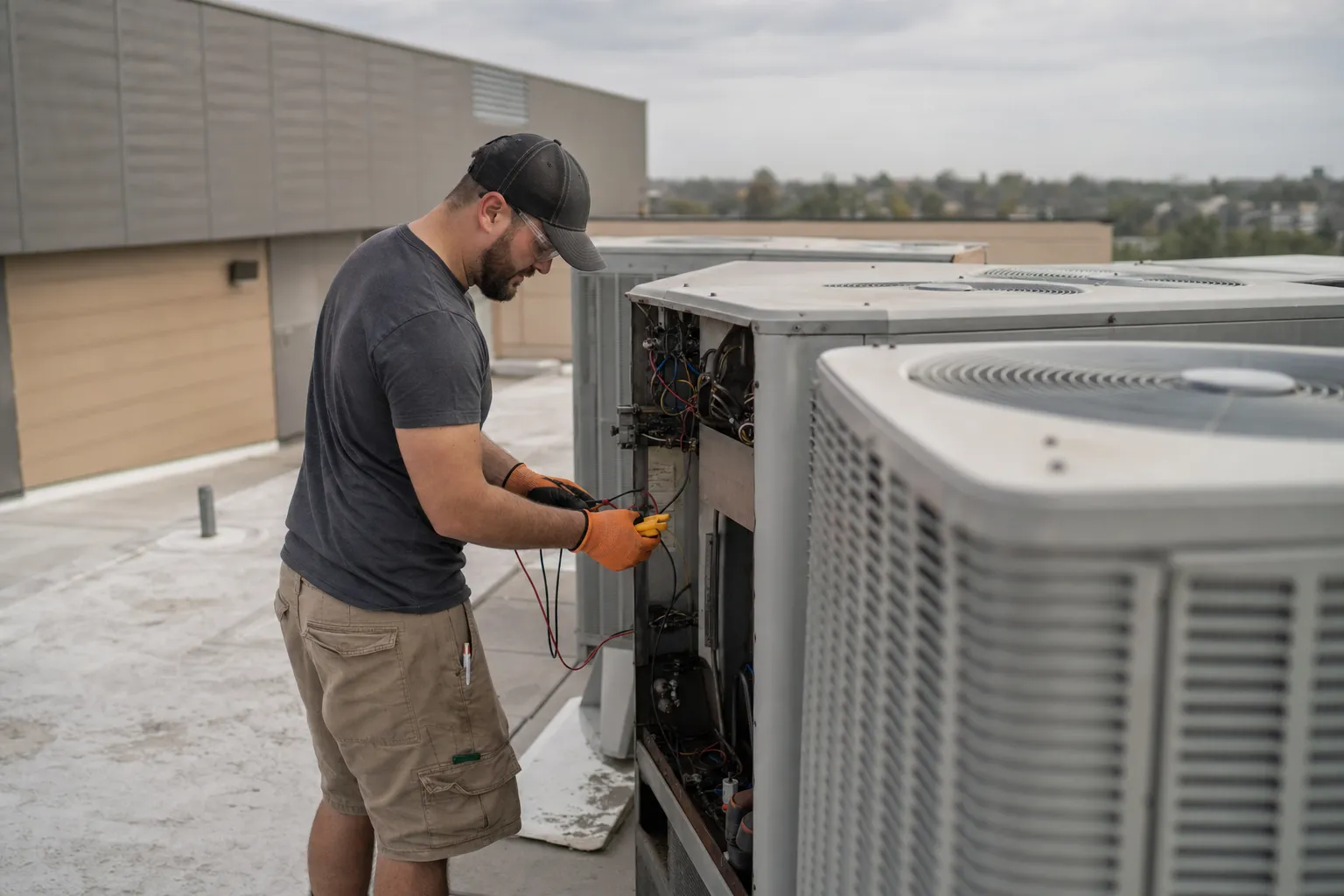
The heat never takes a day off, so neither does HVAC work. That steady demand is the backbone of how pay grows in this trade. Service techs across the market typically land somewhere in the range of $50K to $95K a year, but where you sit inside that range depends heavily on how many years you have on the truck and what skills you have picked up along the way.
This is a look at how HVAC pay tends to progress: what a realistic first year looks like, what changes by year three, and where a decade of experience can put you. These are market ranges, not a guarantee or an offer, and your actual numbers depend on your area, your employer, and the kind of work you do.
What HVAC pay covers
Before the timeline, it helps to know what the work includes. HVAC is a broad trade: install, service, refrigeration, and controls. A service tech diagnoses and repairs heating and cooling systems, an install crew puts new equipment in, refrigeration work leans commercial, and controls work gets into the wiring and logic that runs modern systems. The more of these you can do well, the more valuable you are, and that shows up in pay over time.
The full market range for a service tech is roughly $50K to $95K a year. That is a wide spread on purpose. The bottom reflects someone starting out, and the top reflects an experienced tech with strong diagnostic skills, specialty knowledge, or a lead role.
Year one: getting on the truck
Year one is about proving you show up, learn fast, and do not break things. Most people start as a helper or apprentice-level tech, riding along and handling the parts of the job you have been checked out on. Expect to sit near the lower end of the $50K to $95K range.
What you earn in year one comes down to a few things:
- Whether you walked in with any experience or schooling
- How quickly you can work unsupervised on basic service calls
- Whether the shop does mostly residential, commercial, or refrigeration
- Overtime, which in HVAC is real, especially during peak heating and cooling seasons
That last point matters. Because the heat never takes a day off, busy seasons bring long days, and overtime can push a first-year paycheck higher than the base number suggests. Do not judge year one by base pay alone.
What to focus on in year one
Money follows skill in this trade, so year one is really about banking skill. Learn to diagnose fast, get comfortable with refrigerant handling, and start understanding controls. Every one of those makes the year-three jump bigger.
Year three: the skill jump
By year three you should be running your own calls, handling most repairs without a second set of hands, and starting to specialize. This is usually where pay makes its biggest single move, because you have crossed from "needs supervision" to "brings in revenue on your own."
At this stage many techs move into the middle of the $50K to $95K range. The push toward the upper half depends on what you can do that a first-year tech cannot:
- Solid, fast diagnostics that reduce callbacks
- Refrigeration or commercial experience
- Controls and systems knowledge
- The ability to talk to customers and close needed work
Year three is also when your track record starts to matter to employers. A tech who has spent three years building a reputation for clean, reliable work has real leverage, and that is a good time to see what other shops in your area are paying. If you are curious what the market looks like for your skills, you can get matched with local shops and compare without cold-calling every employer in town.
Year ten: the top of the range and beyond
Ten years in, you are an experienced tech with a deep bag of skills, and you should be at or near the top of the $50K to $95K service tech range. Getting to the high end is not automatic, though. It comes from having gone deep on the work that pays: complex diagnostics, refrigeration, commercial systems, and controls.
By year ten, pay growth often comes from moving into higher-value roles rather than just doing the same calls faster. Common paths include:
- Lead or senior tech handling the hardest calls
- Commercial and refrigeration specialties
- Controls-focused work
- Estimating, service management, or running a crew
Each of these tends to sit at the upper edge of the range, and specialty commercial and refrigeration work is often where the strongest earners land.
What actually drives the jumps
Across all three checkpoints, the same handful of factors decide whether you are near the bottom or pushing the top of the range:
- Diagnostic speed and accuracy. Fewer callbacks and faster fixes make you more profitable, and shops pay for that.
- Specialty skills. Refrigeration and controls consistently separate the top earners from the middle.
- Certifications and licensing. Requirements vary by state and locality, so check what your area requires. Meeting them removes a ceiling on the work you are allowed to do.
- Willingness to work peak season. Overtime during heavy cooling and heating months is a real and reliable part of HVAC income.
- Employer fit. Two shops can pay very differently for the same work. Knowing what is out there is how you avoid leaving money on the table.
How HVAC compares to the other trades
It helps to see HVAC next to its cousins. Market ranges look like this:
- HVAC service tech: $50K to $95K a year
- Electrical journeyman: $62K to $125K a year
- Plumbing journeyman: $60K to $130K a year
The electrical and plumbing ranges top out higher, but those numbers are for journeyman-level roles that require specific licensing. HVAC has a lower barrier to getting started and steady, year-round demand driven by the simple fact that the heat never takes a day off. For a lot of people, that combination of quick entry and constant work is exactly the point.
The bottom line
HVAC pay is a ladder, not a flat line. Year one gets you on the truck near the lower end of the range. Year three is usually your biggest jump as you start running calls solo and specializing. Year ten can put you at the top of the $50K to $95K range, or into a lead or specialty role that sits there consistently. The lever you control is skill: diagnostics, refrigeration, and controls are what move you up.
If you already have some years in and want to see where your experience lands in today's market, it is worth understanding how HyprStart works before you start job hunting the hard way. You tell us what you do, we introduce you to local shops that are hiring, and you never pay a thing.
Frequently asked questions
How much do first-year HVAC techs make?
First-year HVAC techs typically sit near the lower end of the service tech market range of $50K to $95K a year. Overtime during peak heating and cooling seasons can push first-year pay higher than the base number alone suggests.
When does HVAC pay increase the most?
The biggest single jump usually happens around year three, when you go from needing supervision to running your own calls and handling most repairs solo. That shift moves many techs into the middle of the $50K to $95K range.
What is the top pay for an experienced HVAC tech?
Ten years in, experienced techs are often at or near the top of the $50K to $95K service tech range. Reaching the high end usually requires specialty skills like refrigeration, commercial work, or controls, or moving into a lead or management role.
Does HVAC pay less than electrical or plumbing?
The top of the HVAC range ($50K to $95K) is lower than electrical journeyman ($62K to $125K) or plumbing journeyman ($60K to $130K). However, those are licensed journeyman roles, and HVAC offers a lower barrier to entry with steady year-round demand.
What raises your HVAC pay fastest?
Skill drives pay in HVAC. Fast, accurate diagnostics that cut callbacks, plus specialty knowledge in refrigeration and controls, are the biggest factors. Meeting your state's certification and licensing requirements also removes limits on the work you can legally perform.
Is HVAC overtime a real part of income?
Yes. Because heating and cooling systems fail year-round and demand spikes in peak seasons, overtime is a consistent part of HVAC income and can meaningfully raise a paycheck above base pay.
Ready to get introduced, not ghosted?
Tell us what you do. We put you in front of local shops that are hiring. Free to apply.
Get matched →