HVAC in Peak Summer: What the Work Is Really Like and How Techs Get Through It
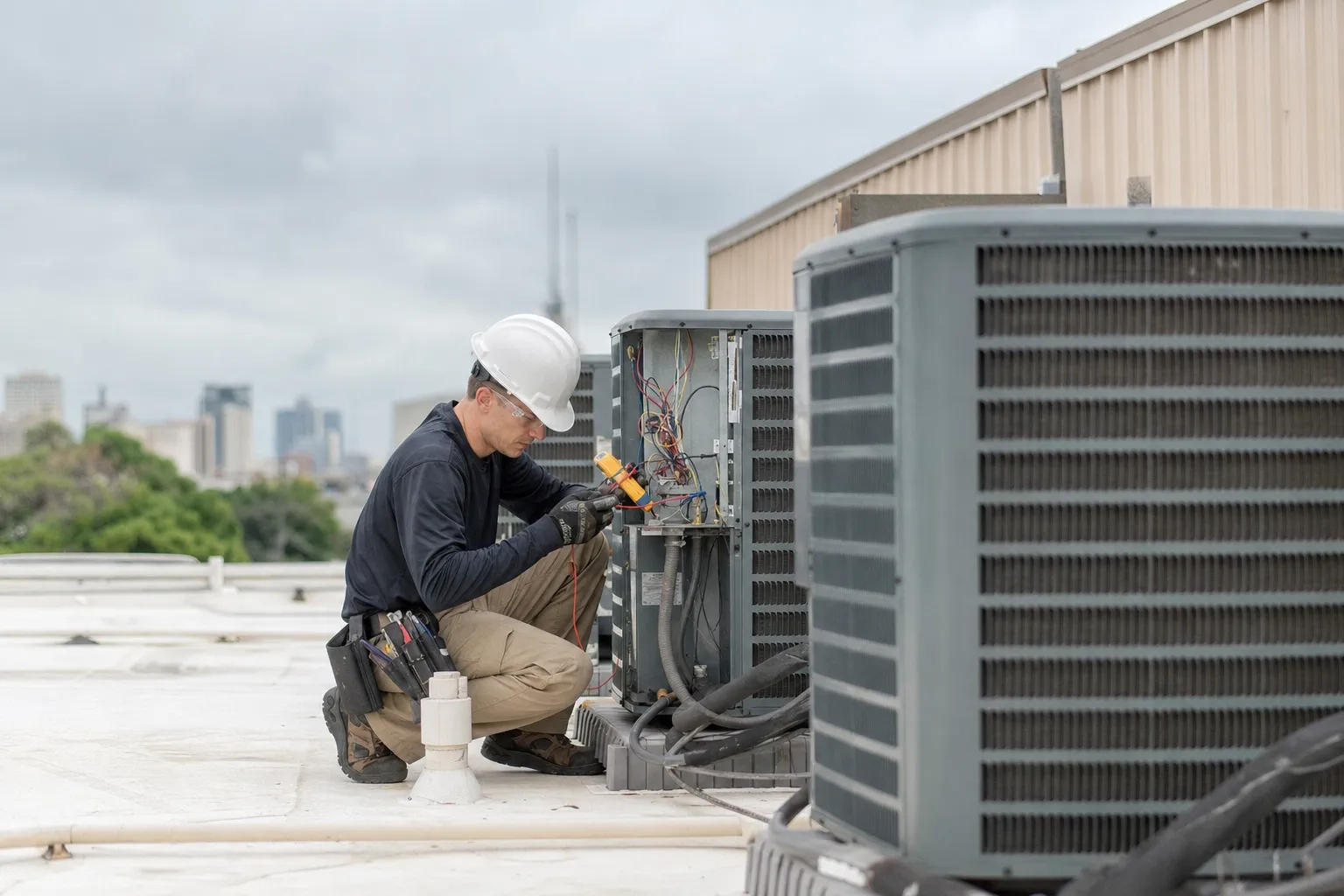
When the outdoor temperature climbs past 100 and the first call of the day is a family with no cooling and a baby in the house, the season stops being about comfort and starts being about survival. That is peak summer for an HVAC service tech. The heat never takes a day off, so neither does the work.
This is an honest look at what those months are like, hour by hour, and the habits techs use to get through them without burning out.
The rhythm of a peak summer day
Most service techs start early on purpose. The coolest part of the day is the morning, and the smart move is to knock out the hottest jobs, attic air handlers, rooftop units, before the sun is fully up.
A typical summer day looks like this:
- A packed schedule. When systems fail in a heat wave, phones do not stop. Techs often run more calls per day than they would in spring or fall.
- Long stretches in extreme heat. Attics, crawlspaces, and flat commercial roofs run far hotter than the air temperature. That is where a lot of the work lives.
- Diagnostics under pressure. A homeowner without cooling wants it fixed now. You are troubleshooting a refrigeration circuit, controls, or a failed capacitor while someone watches and waits.
- Overtime. Peak season is when hours stretch. That is part of why summer earnings often run high for the year.
HVAC covers install, service, refrigeration, and controls. In summer, the service and refrigeration side takes over, because that is what fails when demand spikes.
Why the work is physically hard in summer
The difficulty is not just the calendar. It is the environment.
- Attic and roof heat. A closed attic in the afternoon can be brutal, well above the outdoor reading. Techs work in those spaces to reach air handlers, ductwork, and connections.
- Weight and awkward spaces. Moving equipment, condenser fans, and coils in tight or elevated spots is real physical labor.
- Refrigerant and electrical work together. You are managing a pressurized refrigeration system and live electrical components in the same job, often with sweat in your eyes. Focus matters.
- The clock. Every call has a person on the other end who is uncomfortable. The pace does not let up until the heat does.
None of this is meant to scare anyone off. It is meant to be honest. People who do well in this trade know what they are signing up for and build the habits to handle it.
How experienced techs get through peak season
The techs who last do not just tough it out. They manage the season deliberately.
Hydration is a system, not a reaction
Waiting until you feel thirsty is already behind. Techs who work heat all summer drink steadily through the day and keep electrolytes in the truck. Heat exhaustion sneaks up, and a tech who goes down helps no one.
Start early, sequence the day
Running the hottest, most physical work in the morning and saving lighter diagnostic calls for the afternoon is a common move. You cannot control the schedule completely, but you can control the order when you have a say.
The right gear
Light, breathable clothing, a good hat or cooling towel, knee protection for attic work, and gloves that survive hot metal. Small things that add up over a twelve hour day.
Pace and recovery
Summer is a marathon run at a sprint pace. Techs who protect their sleep, eat real meals, and take the short breaks they are entitled to make it to September in better shape than the ones who skip all of that.
Truck stock discipline
A well stocked truck means fewer supply runs in the heat and fewer callbacks. Common failure parts, capacitors, contactors, refrigerant, are worth keeping on hand in peak season.
What summer means for pay
Peak season is often the highest earning stretch of the year for service techs, because the call volume and overtime are there. Nationally, HVAC service techs typically fall in a range of about $50K to $95K per year. That is a market range, not a promise, and where a specific person lands depends on experience, certifications, the local market, and how much overtime the season brings.
For comparison, other trades in the same market often run higher on the journeyman side. Electrical journeymen typically land around $62K to $125K per year, and plumbing journeymen around $60K to $130K per year. HVAC has its own path, and the summer surge is a real part of the income picture.
Is HVAC worth it if you do not love the heat
Honest answer: nobody loves an attic in August. The question is whether the rest of the job makes the hard weeks worth it.
A lot of techs say yes, for reasons that hold up:
- The work is steady. Cooling fails every summer and heating fails every winter. Demand does not disappear.
- The skills compound. Refrigeration and controls knowledge takes years to build, which makes experienced techs hard to replace.
- The season is not the whole year. Spring and fall are lighter. Summer is the tax you pay for a trade that stays busy.
If you already work in HVAC, you know your own limits and your own strengths. The move that matters is landing at a shop that runs a fair schedule, stocks its trucks, and does not treat peak season as a reason to grind people into the ground.
Finding a shop that runs summer right
Not every employer handles peak season the same way. Some plan routes to minimize afternoon roof work. Some pay overtime cleanly. Some invest in tools and truck stock so techs are not fighting the job on top of the heat. Those differences are worth asking about before you take a role.
That is where we come in. You tell us what you do, install, service, refrigeration, controls, and we get matched with local shops that are actually hiring. Employers pay a placement fee only if they hire you. You never pay anything. If you want the full picture first, here is how HyprStart works.
Peak summer is the hardest part of the HVAC year. With the right habits and the right shop, it is also one of the most rewarding.
Frequently asked questions
What is the hardest part of HVAC work in summer?
The heat load on the body. Attics, crawlspaces, and commercial roofs run far hotter than the outdoor temperature, and that is where a lot of service and refrigeration work happens. Combine that with a packed schedule of no-cooling calls and long hours, and the physical strain is the real challenge of peak season.
How do HVAC techs stay safe in extreme heat?
Experienced techs treat hydration as a routine rather than a reaction, drinking steadily and keeping electrolytes in the truck. They start the hottest jobs early in the day, wear light breathable gear, take the breaks they are entitled to, and protect their sleep and meals so the body can recover for a long season.
How much do HVAC service techs make?
Nationally, HVAC service techs typically fall in a range of about $50K to $95K per year. That is a market range, not a guarantee, and where someone lands depends on experience, certifications, the local market, and overtime. Peak summer is often the highest earning stretch because call volume and overtime are highest then.
Is summer the busiest time for HVAC?
Yes. Cooling systems fail most when demand spikes in a heat wave, so service and refrigeration calls surge in peak summer. Phones do not stop, techs often run more calls per day than in spring or fall, and hours stretch into overtime.
Does HVAC pay more than electrical or plumbing?
On the journeyman side, electrical and plumbing often run higher, with electrical journeymen typically around $62K to $125K per year and plumbing journeymen around $60K to $130K per year, compared with about $50K to $95K for HVAC service techs. HVAC has its own path, and summer overtime is a real part of the income picture.
How can I find an HVAC shop that treats techs well in summer?
Ask how a shop sequences routes, whether it pays overtime cleanly, and whether it stocks trucks well so you are not making constant supply runs in the heat. HyprStart introduces HVAC workers directly to local shops that are hiring, at no cost to the worker, so you can compare employers before committing.
Ready to get introduced, not ghosted?
Tell us what you do. We put you in front of local shops that are hiring. Free to apply.
Get matched →