How to Get Into Plumbing With No Experience: What the First Year Actually Looks Like
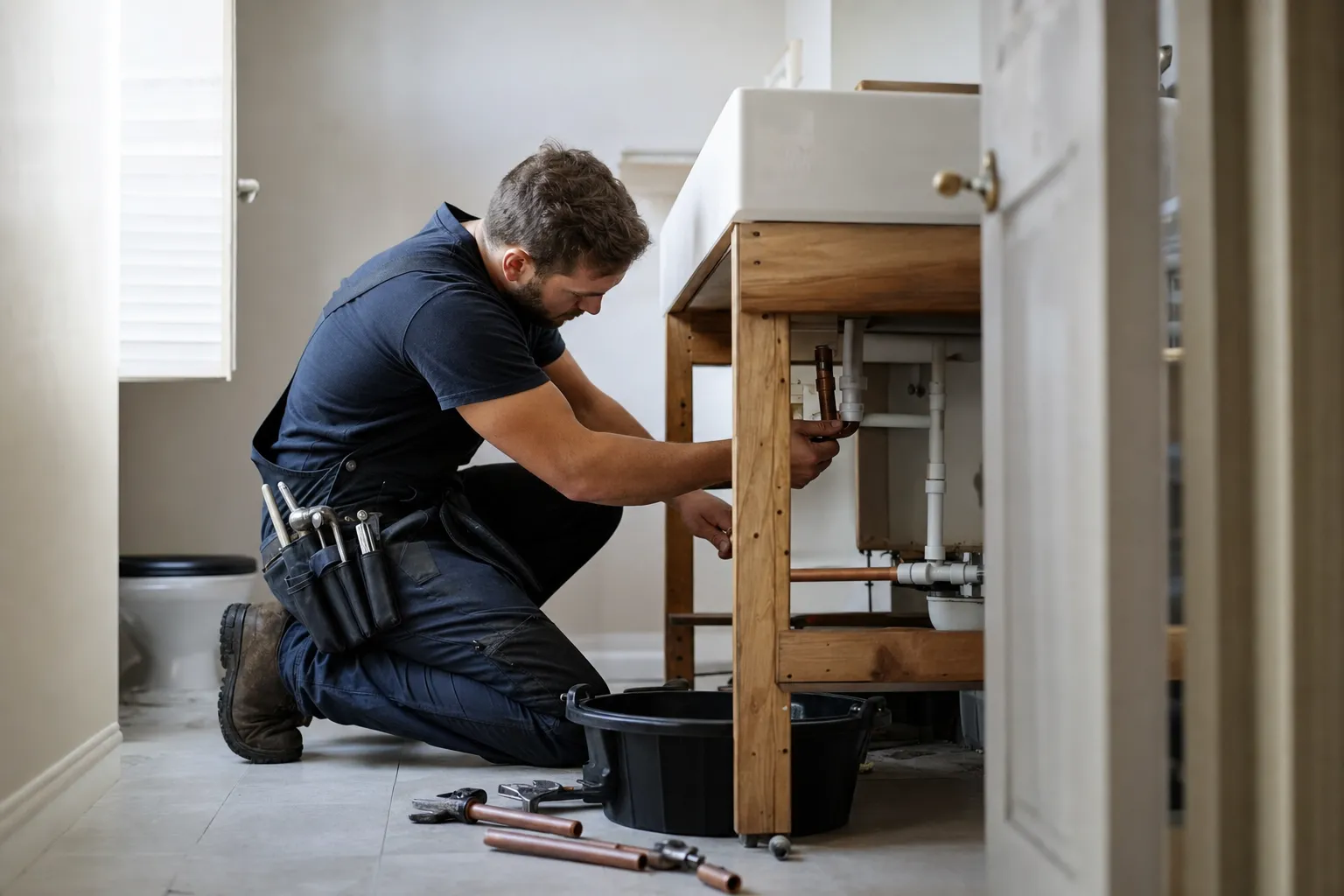
Most people picture a plumber under a sink with a wrench. The reality of a first year is quieter than that: you show up early, you carry tools, you learn how a building moves water, and you spend a lot of time watching before you ever touch a job on your own. That slow start is normal, and it is also why plumbing is one of the more forgiving trades to enter with no background at all.
Licensed plumbers are scarce in every market we cover, which means shops are willing to bring on someone green and pay them to learn. You do not need a degree, and you do not need to already know the difference between PEX and copper. You need to be reliable, willing to do the unglamorous parts, and able to stick with it long enough to get good.
You do not need experience, you need a starting spot
The honest truth is that almost nobody starts in plumbing knowing anything. The trade is built around teaching from zero. Work covers a few different worlds - service, new construction, repipe, and remodel - and each one teaches you a slightly different set of skills.
- Service is repair and troubleshooting in homes and businesses. You learn diagnosis and customer interaction fast.
- New construction is running pipe in buildings that are still being framed. High volume, repeatable work, good for building speed.
- Repipe is replacing old systems in existing buildings.
- Remodel is a mix of demo, fit, and finish inside occupied spaces.
Many people who enter with no experience begin as a helper or apprentice on new construction or service, because those are where shops need hands the most. You do not have to choose a specialty on day one. The first year is largely about being exposed to enough of the work that you find out what you like.
What your first year actually looks like
Forget the idea that you will be soldering joints in week one. Here is the more accurate progression.
Months 1 to 3: the ground floor
Expect to carry material, dig, clean up job sites, fetch tools, and stage parts. This is not busywork for its own sake. Learning where everything goes and how a crew operates is the foundation for everything after. You will also start learning the names of fittings, pipe types, and tools, because a plumber who can hand over the right part without being told twice becomes useful quickly.
You will make mistakes. Everyone does. The people who last are the ones who own the mistake and ask how to avoid it next time.
Months 4 to 8: hands on the work
Once you have proven you show up and pay attention, the real teaching starts. You begin measuring and cutting pipe, assembling simple runs under supervision, and understanding why water and waste move the way they do. You start to see the logic behind a system instead of just following instructions.
This is usually when the trade clicks for people. The job stops feeling like fetching and starts feeling like building something.
Months 9 to 12: doing real portions of the job
By the end of a first year, a motivated apprentice is often handling meaningful pieces of a job with a licensed plumber checking the work. You are not licensed and you are not on your own, but you are contributing real labor, not just support. This is also the point where a shop starts to see you as an investment worth keeping.
The licensing path in plain terms
Plumbing is a licensed trade, and the path runs through hours on the job, not a shortcut. In general, you work as an apprentice, log supervised hours, and eventually test toward becoming a journeyman. Licensing rules and required hours vary by state and locality, so confirm the exact requirements where you live before you plan around a timeline.
The key point for someone starting out: you get paid while you accumulate those hours. Plumbing does not ask you to pay for years of school first and then hope for a job. The learning and the earning happen at the same time.
What the pay looks like as you progress
Starting pay for a first-year apprentice is modest, because you are being trained. What matters is the direction it heads. A licensed journeyman plumber typically earns in the range of $60K to $130K per year. That is a national market range, not a promise or a HyprStart offer, and where you land inside it depends on your market, your specialty, and how good you get.
For comparison across the trades we work with, an HVAC service tech typically runs $50K to $95K per year and an electrical journeyman typically runs $62K to $125K per year. Plumbing sits at the top end of that spread, which is one reason it is worth the patient first year.
The path from apprentice to that journeyman range is not instant, but it is real and it is well worn. Scarcity of licensed plumbers keeps demand steady, which protects both your ability to find work and your leverage on pay over time.
How to actually get started
Getting a foot in the door is the part that stops most people, because cold-applying to shops with no experience feels like shouting into a void. It does not have to work that way.
- Get honest about what you can offer. You are trading reliability and willingness to learn, not experience. Say that plainly.
- Be ready for physical work. Digging, lifting, tight crawlspaces, early mornings. If that is fine with you, say so.
- Find shops that are actively hiring helpers. This is the hard part on your own, and it is exactly what HyprStart handles.
HyprStart is a direct-hire service for the skilled trades. You tell us what you do, or in this case what you want to start doing, and we introduce you straight to local shops that are hiring. You can get matched with local shops without paying anything - employers pay a placement fee only if they hire you, and the worker never pays a cent. If you want the full picture before you start, here is how HyprStart works.
Is the first year worth it?
If you are looking for easy money right away, plumbing is not that. If you are looking for a trade where you start with nothing, get paid to learn, and can grow into a licensed role that pays well and stays in demand, the first year is the price of entry, and it is a fair one. The work is steady, the skill is portable, and the ceiling is high enough to build a career on.
Frequently asked questions
Can I really get into plumbing with no experience?
Yes. The trade is built to teach from zero, and because licensed plumbers are scarce in every market we cover, shops are willing to hire helpers and apprentices with no background. You do not need a degree or prior knowledge, just reliability and willingness to learn.
How much do plumbers make?
A licensed journeyman plumber typically earns in the range of $60K to $130K per year. That is a national market range, not a guarantee, and where you fall in it depends on your market, specialty, and skill level. First-year apprentice pay is lower because you are being trained.
Do I have to pay for school before I can start plumbing?
No. Plumbing lets you earn while you learn. You work as an apprentice, get paid, and accumulate the supervised hours needed to progress toward becoming a journeyman. Licensing requirements vary by state and locality, so confirm the specifics where you live.
What will I actually do in my first year as a plumbing apprentice?
Early on you carry material, dig, clean up, and learn tools and fittings. By months four to eight you start measuring, cutting, and assembling pipe under supervision. By the end of the year, a motivated apprentice is often handling real portions of jobs with a licensed plumber checking the work.
How is plumbing pay compared to other trades?
Among the trades HyprStart works with, plumbing sits at the top of the range. A journeyman plumber typically earns $60K to $130K per year, compared with $50K to $95K for an HVAC service tech and $62K to $125K for an electrical journeyman.
How does HyprStart help me get a plumbing job?
You tell HyprStart what you want to do and we introduce you directly to local shops that are hiring. It is free for you - employers pay a placement fee only if they hire you, and the worker never pays anything.
Ready to get introduced, not ghosted?
Tell us what you do. We put you in front of local shops that are hiring. Free to apply.
Get matched →