How a Registered Apprenticeship Actually Works: Hours, Classroom Time, and Pay Steps
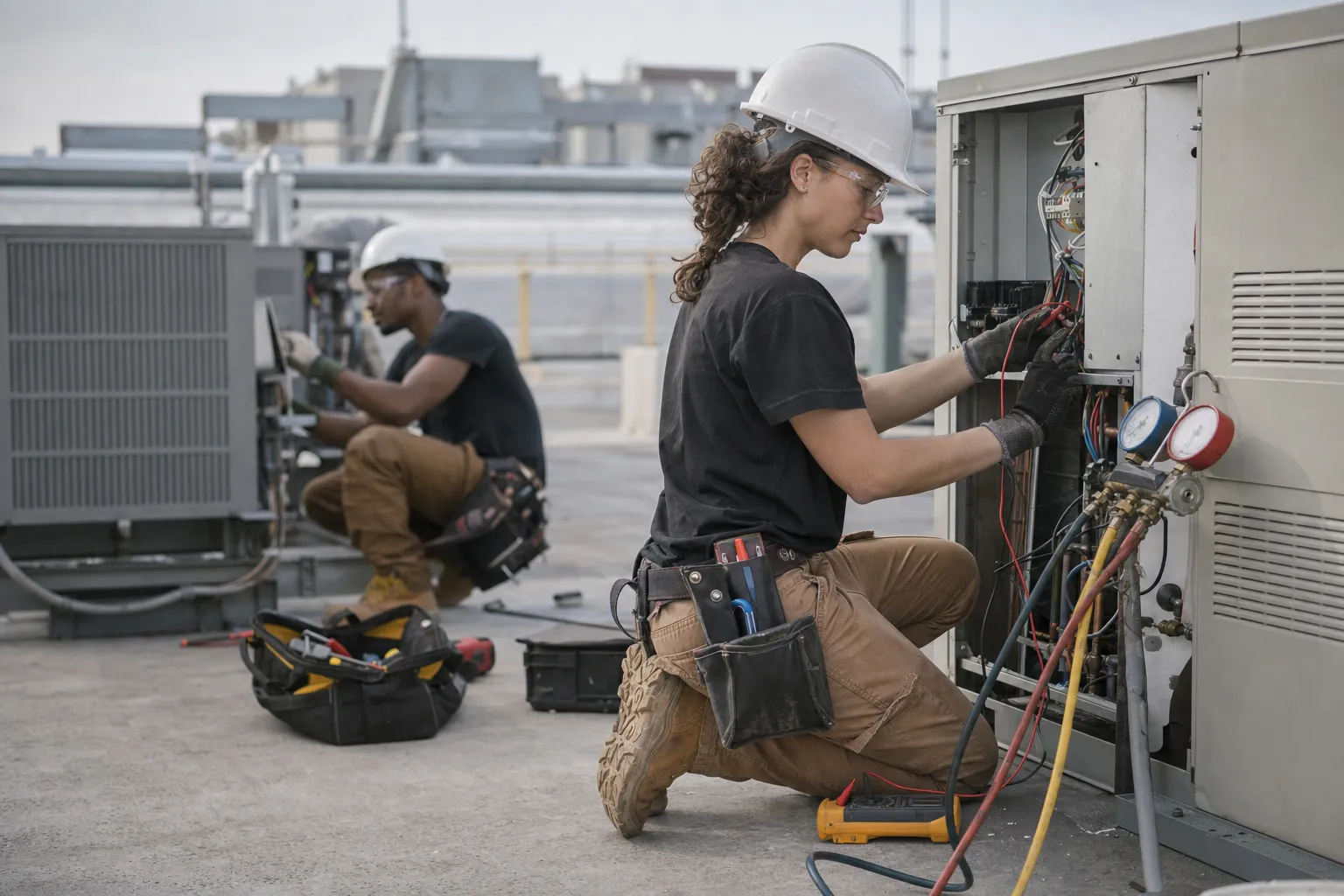
A registered apprenticeship is a paid job first and a school program second. You earn a wage from day one, and your pay steps up on a schedule as you log hours and finish classroom work. That structure is the part most people do not understand until they are already in it, so here is how it actually runs from start to journeyman.
What "registered" means
A registered apprenticeship is a formal training program that combines paid on-the-job work with related classroom instruction. "Registered" means the program follows a set standard: a defined number of work hours, a defined amount of classroom time, and a wage schedule that rises as you progress. You are a working employee the entire time, not a student paying tuition to sit and watch.
The result at the end is a credential. In the trades, that credential is journeyman status, which is what unlocks the higher end of the pay ranges below.
The two halves: on-the-job hours and classroom time
Every registered apprenticeship has two tracks running at the same time.
- On-the-job training (OJT). This is the paid work you do alongside experienced techs and journeymen. You are on real job sites doing real work, and every hour counts toward your total. This is where most of your learning happens.
- Related classroom instruction. This is the technical theory: code, math, safety, blueprint reading, and the fundamentals behind the work you do in the field. It usually happens on a schedule that fits around your work, often evenings or set days.
Both tracks have to be completed. You cannot skip the classroom by working more hours, and you cannot skip the field hours by acing the classroom. The two are meant to reinforce each other, so what you read about one week you often see on a job site the next.
How the hours add up
An apprenticeship is measured in hours, not semesters. You advance by logging documented on-the-job hours and completing the classroom instruction that goes with them. Your progress is tracked, and each block of hours you complete moves you closer to the next pay step and, eventually, to journeyman.
Because it is measured in hours, the pace can vary. Steady full-time work moves you through faster. Slow seasons or time off can stretch the timeline. The key is that the hours are yours once they are logged, and they carry your progress forward.
How pay steps work
This is the part that makes apprenticeships different from unpaid training. Your wage is set to rise in steps as you advance. You start at an entry rate, and each time you hit a defined block of hours and classroom milestones, your pay steps up toward the journeyman rate.
The idea is simple: as you become more useful on a job site, you get paid more. You are not waiting until the end to see any reward. The increases are built into the schedule, so a first-year apprentice and a third-year apprentice on the same crew are not earning the same wage.
Where those steps lead depends on your trade. These are national market ranges, not a HyprStart offer or a guarantee, but they show the target you are working toward:
- HVAC service tech: typically $50K to $95K per year.
- Electrical journeyman: typically $62K to $125K per year.
- Plumbing journeyman: typically $60K to $130K per year.
The higher numbers in each range generally belong to workers who have finished their hours, earned their credential, and built a reputation. The apprenticeship is the on-ramp to that.
What journeyman status unlocks
When you complete both the on-the-job hours and the classroom instruction, you reach journeyman status. That is the milestone the whole program is built around. A journeyman can work with far less supervision, takes on more complex jobs, and sits at the higher end of the pay ranges above.
Journeyman is also the foundation for what comes next in most trades, whether that is specializing, taking on lead roles, or eventually moving toward running your own work. None of that is possible without first completing the apprenticeship hours and classroom time that get you there.
Why the paid structure matters
A lot of people compare the trades to a traditional degree and stop at the tuition question. The apprenticeship model flips it. Instead of paying to learn and then hoping to find work, you get hired first, learn on the clock, and step your pay up as you go. You are building income and a credential at the same time.
That is also why finding the right shop matters so much. Your on-the-job hours are only as good as the work you are actually put on. A shop that gives you varied, real work moves your skills forward faster than one that parks you on the same task for a year. The employer you start with shapes the quality of your hours, not just your paycheck.
How to find a shop that will take you on
The hardest part for most people is not the classroom or the hours. It is getting in the door at a shop that is hiring and willing to bring on someone at your level. That is exactly what HyprStart does. You tell us what you do, and we introduce you straight to local shops that are hiring. Employers pay a placement fee only if they hire you, and the worker never pays anything.
If you are ready to start logging hours toward journeyman, you can get matched with local shops instead of cold-applying one at a time. If you want the full picture of the process before you commit, here is how HyprStart works from first conversation to placement.
An apprenticeship rewards showing up. The hours are real, the pay steps are real, and the credential at the end is what carries you into the top of your trade's pay range. The sooner you get placed at a solid shop, the sooner those hours start counting.
Frequently asked questions
Do you get paid during a registered apprenticeship?
Yes. A registered apprenticeship is a paid job from day one. You earn a wage while you complete on-the-job hours and classroom instruction, and that wage steps up as you progress toward journeyman.
How does apprenticeship pay increase over time?
Your pay rises in steps. You start at an entry rate, and each time you complete a defined block of on-the-job hours and classroom milestones, your wage steps up toward the journeyman rate. First-year and later-year apprentices on the same crew do not earn the same wage.
What is the difference between on-the-job hours and classroom time?
On-the-job training is the paid work you do on real job sites alongside experienced techs, and every hour counts toward your total. Classroom instruction covers the technical theory like code, math, safety, and blueprint reading. Both tracks run at the same time and both must be completed.
What do you get at the end of an apprenticeship?
You reach journeyman status, the credential the program is built around. A journeyman works with far less supervision, takes on more complex jobs, and sits at the higher end of the trade's pay range.
How much can journeymen earn in the trades?
These are national market ranges, not a guarantee. HVAC service techs typically earn $50K to $95K per year, electrical journeymen typically earn $62K to $125K per year, and plumbing journeymen typically earn $60K to $130K per year. The higher numbers generally go to workers who have finished their hours and earned their credential.
How long does an apprenticeship take?
An apprenticeship is measured in documented hours rather than semesters, so the pace depends on how steadily you work. Full-time work moves you through faster, while slow seasons or time off can stretch the timeline. The hours are yours once they are logged.
Ready to get introduced, not ghosted?
Tell us what you do. We put you in front of local shops that are hiring. Free to apply.
Get matched →