From Retail or Warehouse Work Into the Trades: What the On-Ramp Actually Looks Like
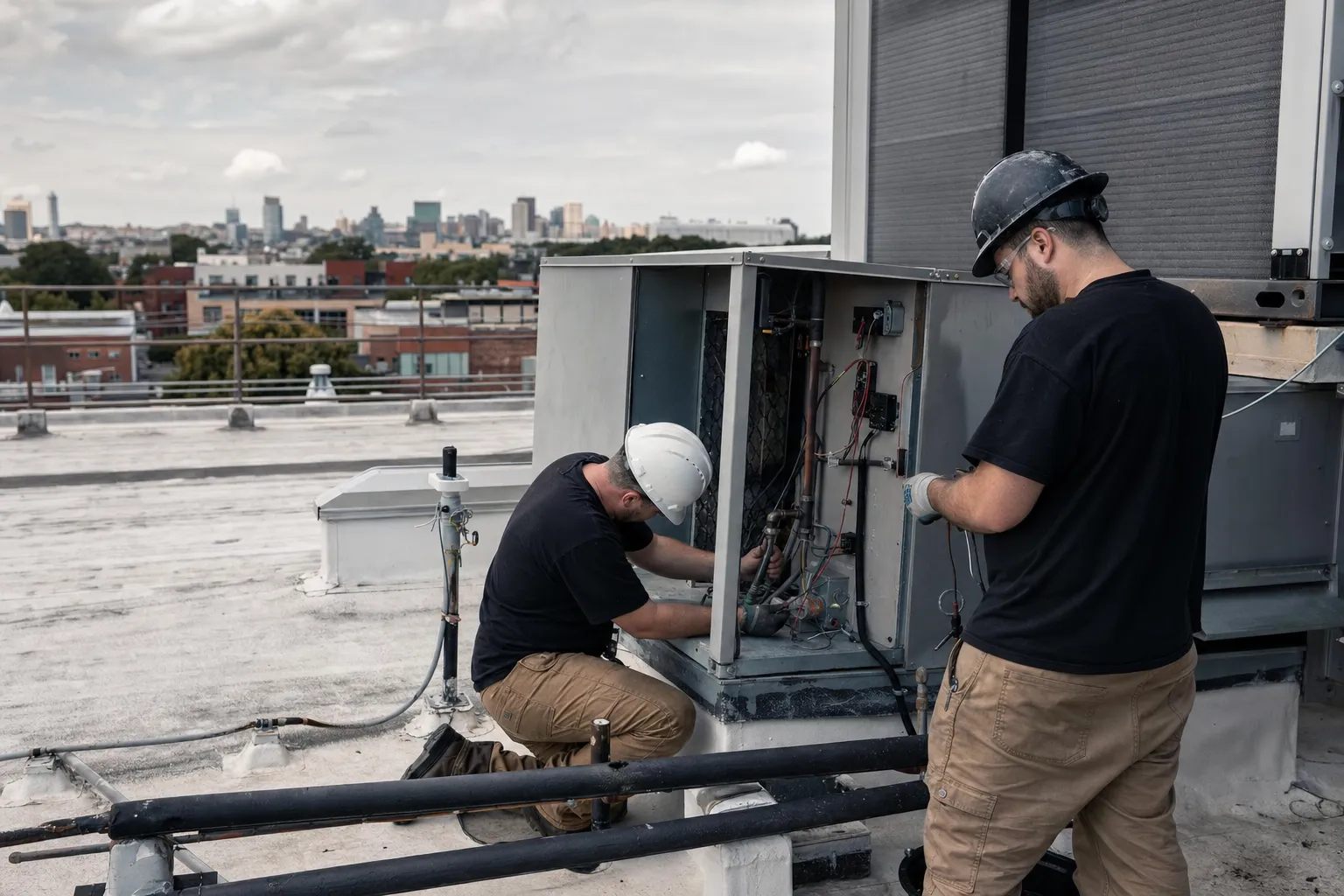
If you already spend your shift on your feet, moving heavy stock, reading labels, and hitting a schedule, you have more of a head start on a trades career than you think. The habits that get you through a retail floor or a warehouse pick line - showing up on time, following a process, working safely around equipment - are the same habits a service tech or an apprentice needs on day one.
The move from retail or warehouse work into HVAC, electrical, or plumbing is one of the most common career changes we see. This guide walks through the most common on-ramp, what to expect, and the pay ranges these roles tend to fall into.
Why retail and warehouse workers make the jump
Retail and warehouse jobs teach a set of skills that carry directly into the trades:
- Physical stamina. You are used to a full shift of standing, lifting, and moving. Trades work is physical, and employers value people who already have that in the tank.
- Reliability. Showing up on time and finishing your tasks is the single trait shops mention most. If you have a clean attendance record, that matters.
- Following a process. Scanning, sorting, and stocking all train you to follow a repeatable procedure. Trades work runs on procedures too, from safety checks to install steps.
- Comfort with tools and equipment. If you have run a pallet jack, a scanner, or a forklift, you are not starting from zero around machinery.
The main difference is pay ceiling and a clearer path to raise it. Trades roles reward skill and licensing over time, and the ranges reflect that.
The most common on-ramp: entry-level helper or apprentice
The usual first step is not a classroom. It is a paid position as a helper or apprentice with a local shop. You learn on the job, get paid while you learn, and work toward the credentials that unlock higher pay.
Here is what that path generally looks like:
1. Start as a helper or apprentice
You join a crew and assist a licensed or experienced worker. You carry materials, prep job sites, hand off tools, and start learning the trade by watching and doing. This is where your warehouse or retail habits pay off immediately, because you are useful from the first shift.
2. Build hours and skills on the job
The trades are hours-based. The more time you log doing real work under supervision, the more capable you become. Over months, you move from carrying and prepping to doing more of the skilled work yourself.
3. Work toward licensing where it applies
Electrical and plumbing typically move through a journeyman path, where hours and testing lead to a recognized credential. HVAC has its own service-tech track. Licensing rules vary by state and locality, so the specific requirements depend on where you live. The important part for a career-changer is that the entry role does not require you to have that credential first. You earn it along the way.
4. Grow into a full role
As you gain skill and credentials, you move into a full service tech or journeyman position, which is where the pay ranges below apply.
What these roles tend to pay
These are national market ranges for established roles, not a guarantee and not an offer. Where you land inside a range depends on your skill, your credentials, your hours, and your local market.
- HVAC service tech: roughly $50K to $95K per year.
- Electrical journeyman: roughly $62K to $125K per year.
- Plumbing journeyman: roughly $60K to $130K per year.
A helper or apprentice generally starts below these ranges and climbs toward them as skill and credentials build. The point of the on-ramp is that you get paid while you move up, rather than paying tuition and hoping for a job at the end.
Which trade should you consider?
There is no single right answer, but a few things help you narrow it down:
- HVAC blends mechanical work, electrical basics, and customer-facing service calls. If you liked the variety of a retail day and want to be out solving problems, this suits a lot of people.
- Electrical rewards precision and code knowledge, and the journeyman range is strong. If you are detail-oriented and like clear rules, it is worth a look.
- Plumbing has the highest top end of the three ranges here and steady demand. If you do not mind physical, hands-on work in tight spots, it fits.
You do not have to commit forever. Many people try a helper role, learn what the day-to-day feels like, and adjust from there.
How to actually start without a resume full of trade experience
This is the part that stops most people. You do not have trade experience yet, so the traditional job-board approach feels like a wall. The fix is to lead with what you do have and let a shop see it.
That is what HyprStart is built for. You tell us what you do now and what you want to move into, and we introduce you directly to local shops that are hiring. You can get matched with local shops without cold-applying to dozens of listings. The service is free for you: employers pay a placement fee only if they hire, and the worker never pays anything. If you want the full picture before you start, here is how HyprStart works.
When you reach out to shops, whether on your own or through a match, keep the pitch simple and honest:
- Say what you do now and how long you have done it.
- Point to reliability: attendance, safety, showing up.
- Say clearly that you want to learn the trade and are ready to start as a helper or apprentice.
Shops hire for attitude and reliability at the entry level far more than for existing trade skills. The skills they can teach. The habits you already have.
What to expect in the first year
The first year is a learning curve, and it is normal to feel new. Expect early mornings, physical days, and a lot of watching before doing. Expect to be corrected often, because that is how the trade gets taught. And expect your pay to reflect an entry role at first, with a clear reason it climbs as your hours and skills build toward the ranges above.
If you have made it through peak-season retail or a full warehouse shift, you already know how to work hard on a schedule. The trades take that same effort and point it at a career with a higher ceiling and a credential that follows you wherever you go.
Frequently asked questions
Can I get into the trades with no experience, coming from retail or warehouse work?
Yes. The most common on-ramp is a paid helper or apprentice role where you learn on the job. Shops hire entry-level workers for reliability and work ethic, which retail and warehouse jobs build, and the trade skills are taught as you go.
How much do trades jobs pay compared to retail or warehouse work?
National market ranges for established roles are roughly $50K to $95K per year for an HVAC service tech, $62K to $125K for an electrical journeyman, and $60K to $130K for a plumbing journeyman. These are ranges you climb toward as skill and credentials build, not starting pay or a guarantee.
Do I need a license before I can start in the trades?
No. The entry helper or apprentice role does not require a credential first. You earn licensing along the way, often through logged hours and testing. Requirements vary by state and locality, so check the rules where you live.
Which trade is the best starting point for a career changer?
It depends on what you like. HVAC blends mechanical, electrical, and customer service work. Electrical rewards precision and code knowledge. Plumbing has the highest top end of the three ranges here. Trying a helper role is a low-risk way to learn what fits.
How do I find a shop that will hire someone new to the trade?
You can apply directly, or use HyprStart to get introduced to local shops that are hiring. You tell us what you do and what you want to move into, and we match you. It is free for workers, since employers pay a placement fee only if they hire.
What skills from retail or warehouse work carry over to the trades?
Physical stamina, reliability and attendance, following a repeatable process, and comfort around tools and equipment all carry over directly. These are the traits shops mention most when hiring at the entry level.
Ready to get introduced, not ghosted?
Tell us what you do. We put you in front of local shops that are hiring. Free to apply.
Get matched →