First Trades Job Tool List: What to Buy and What the Shop Supplies
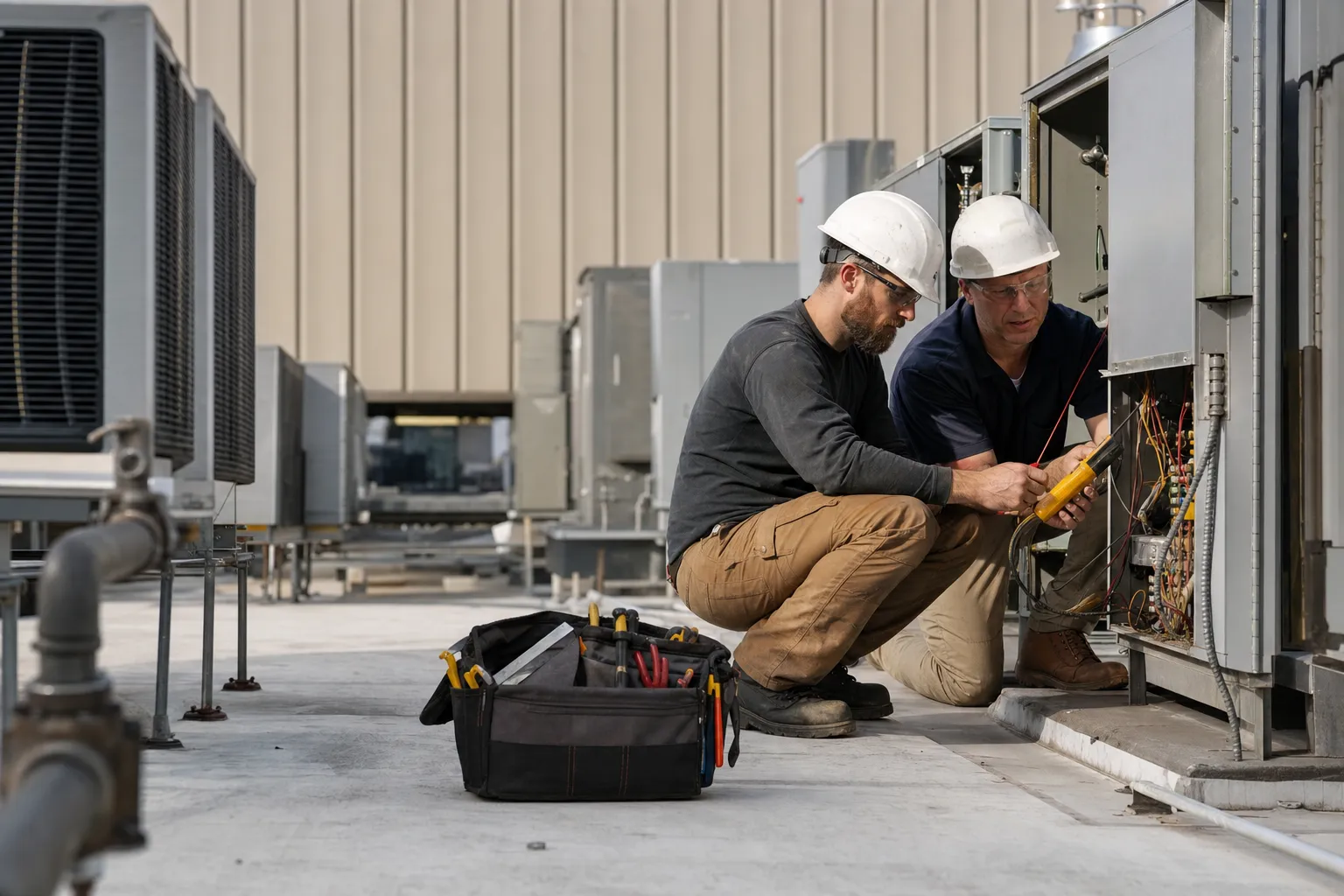
Walk onto a job site your first morning with a duffel bag stuffed full of every tool you own, and a seasoned tech will smile, because most of what is in that bag stays in the truck. The truth about starting in HVAC, electrical, or plumbing is that you need far less than the tool aisle wants you to believe. The shop covers the expensive equipment. You bring the basics that stay in your pouch.
This guide breaks down what you actually buy, what the employer supplies, and how to avoid dropping a paycheck on gear you will not touch for a year.
The rule that clears up most confusion
Here is the line that sorts almost every tool: you supply the hand tools that live in your pouch. The employer supplies the power tools, specialty gauges, and anything expensive or job-specific.
A new hire is expected to show up with a working set of personal hand tools. That is a normal expectation across the trades and it signals you are serious. But you are not expected to own a set of manifold gauges, a pipe threader, or a cordless drill kit. Those belong to the shop, get shared, and cost more than a first-week paycheck.
If a shop asks you to buy the big-ticket, trade-specific equipment out of pocket on day one, that is a red flag worth asking about.
What you buy: the core hand tools
These cross all three trades. Buy these first, buy them decent but not top-shelf, and add as you go.
- Tape measure - a 25 foot is the everyday standard.
- Utility knife and spare blades.
- Screwdrivers - a few flatheads and Phillips, or a good multi-bit driver.
- Pliers - lineman's pliers, needle-nose, and a set of channel-locks.
- Adjustable wrench.
- Level - a torpedo level fits a pouch.
- Flashlight or headlamp - you will use it every single day.
- A tool bag or pouch and a tool belt.
That list gets you through your first weeks in any of the three trades without looking unprepared.
What you buy: trade-specific hand tools
Once you know which trade you are in, add the hand tools specific to it. Still hand tools. Still affordable.
HVAC
- Nut drivers and a 1/4 inch and 5/16 inch hex.
- A basic multimeter for reading voltage. Some shops supply this, so ask first.
- Refrigeration wrench and a fin comb are handy but the shop often has them.
Electrical
- Wire strippers.
- A non-contact voltage tester.
- A pair of dedicated electrician's pliers if not already in your core kit.
- A basic voltage tester or multimeter. As with HVAC, confirm before buying.
Plumbing
- Channel-lock pliers in a couple of sizes.
- A basin wrench.
- A tubing cutter for smaller jobs.
- A pipe wrench if the shop expects you to bring your own, though larger wrenches are commonly shared.
Notice the pattern: even inside a trade, the priciest items lean toward the employer.
What the employer supplies
Most shops provide the equipment that is expensive, shared, or specific to the work. Typically that includes:
- Power tools - cordless drills, impact drivers, reciprocating saws, and their batteries and chargers.
- Specialty gauges and meters - manifold gauge sets, recovery machines, and vacuum pumps for HVAC.
- Large or costly hand tools - pipe threaders, large pipe wrenches, benders, and knockout sets.
- Ladders, harnesses, and fall protection.
- Consumables - fittings, wire, solder, refrigerant, and other job materials.
- Company vehicle or the stocked truck for service roles.
Some employers also provide or reimburse a starter allowance for personal hand tools, especially for apprentices. It is worth asking during the interview.
Safety gear: usually shared responsibility
Safety equipment often splits. Employers are generally responsible for providing what a site requires, but many workers still keep their own so it fits right and is always on hand.
- Safety glasses - buy a pair you will actually wear.
- Work gloves - a couple of pairs.
- Steel-toe or composite-toe boots - almost always on you to buy. Get good ones. Your feet carry you through a career.
- Hard hat and hearing protection - commonly supplied for the specific site.
Ask the shop what they provide versus what you bring. The answer varies and it is a fair question to raise before your first day.
Do not overbuy before day one
The most common first-job mistake is spending too much, too soon. You do not know the exact tools your shop standardizes on, and you do not yet know what they hand you. Bring your core hand tools, show up ready, and let the first few weeks tell you what to add.
Buying as you go also spreads the cost across paychecks instead of all at once. And the pay makes that easy to manage over time. Market ranges run roughly:
- HVAC service tech: $50K to $95K per year.
- Electrical journeyman: $62K to $125K per year.
- Plumbing journeyman: $60K to $130K per year.
Those are national ranges, not a guarantee, and they climb as you move from entry level toward journeyman. The point is simple: a solid starter kit is a small fraction of a first-year income, and you build from there.
Ask these questions before your first day
A quick message or call to the shop clears up almost everything:
- What hand tools do you expect me to bring?
- Do you supply power tools and specialty gauges?
- Is there a tool allowance or reimbursement?
- What safety gear do you provide, and what should I buy?
Good employers answer these plainly. If you want help finding shops that treat new hires well and are clear about expectations, you can get matched with local shops that are actively hiring. For a quick look at the process, here is how HyprStart works: you tell us what you do, we introduce you to hiring shops nearby, and the worker never pays anything.
Bottom line
Bring your core hand tools and any trade-specific hand tools you already own. Wear boots you trust. Let the employer supply the power tools, gauges, ladders, and materials. Buy the rest gradually as the job shows you what you need. That approach keeps your money in your pocket and gets you through your first week looking prepared, not overloaded.
Frequently asked questions
Do I need to buy my own tools for my first trades job?
You are generally expected to bring your own hand tools that live in your pouch, like a tape measure, screwdrivers, pliers, and a level. The employer typically supplies power tools, specialty gauges, ladders, and materials. Confirm the exact split with the shop before your first day.
What tools does the employer supply in HVAC, electrical, or plumbing?
Most shops provide power tools such as drills and impact drivers, specialty gauges and meters like manifold sets, large or costly hand tools such as pipe threaders and benders, ladders and fall protection, consumable materials, and a stocked company vehicle for service roles.
Do trades workers have to pay for their own steel-toe boots?
In most cases yes, work boots are on you to buy. Safety glasses and gloves are often personal too, while hard hats and hearing protection are commonly supplied for the specific site. Ask your employer what they provide versus what you bring.
How much do I need to spend on tools before starting?
Far less than you might think. Start with a core set of affordable hand tools and add trade-specific pieces as you learn what your shop uses. Buying gradually spreads the cost and avoids paying for gear you will not touch for a year.
Should I buy expensive tools before my first day?
No. You do not yet know what tools your shop standardizes on or what they will hand you. Bring your core hand tools, show up ready, and let the first few weeks show you what to add so you do not overbuy.
Does starting pay cover the cost of a starter tool kit?
A solid starter kit is a small fraction of first-year income. Market ranges run roughly $50K to $95K for HVAC service techs, $62K to $125K for electrical journeymen, and $60K to $130K for plumbing journeymen. These are national ranges, not a guarantee, and pay climbs toward journeyman level.
Ready to get introduced, not ghosted?
Tell us what you do. We put you in front of local shops that are hiring. Free to apply.
Get matched →