EPA 608 Certification Explained: The Four Types, How to Study, and What It Costs
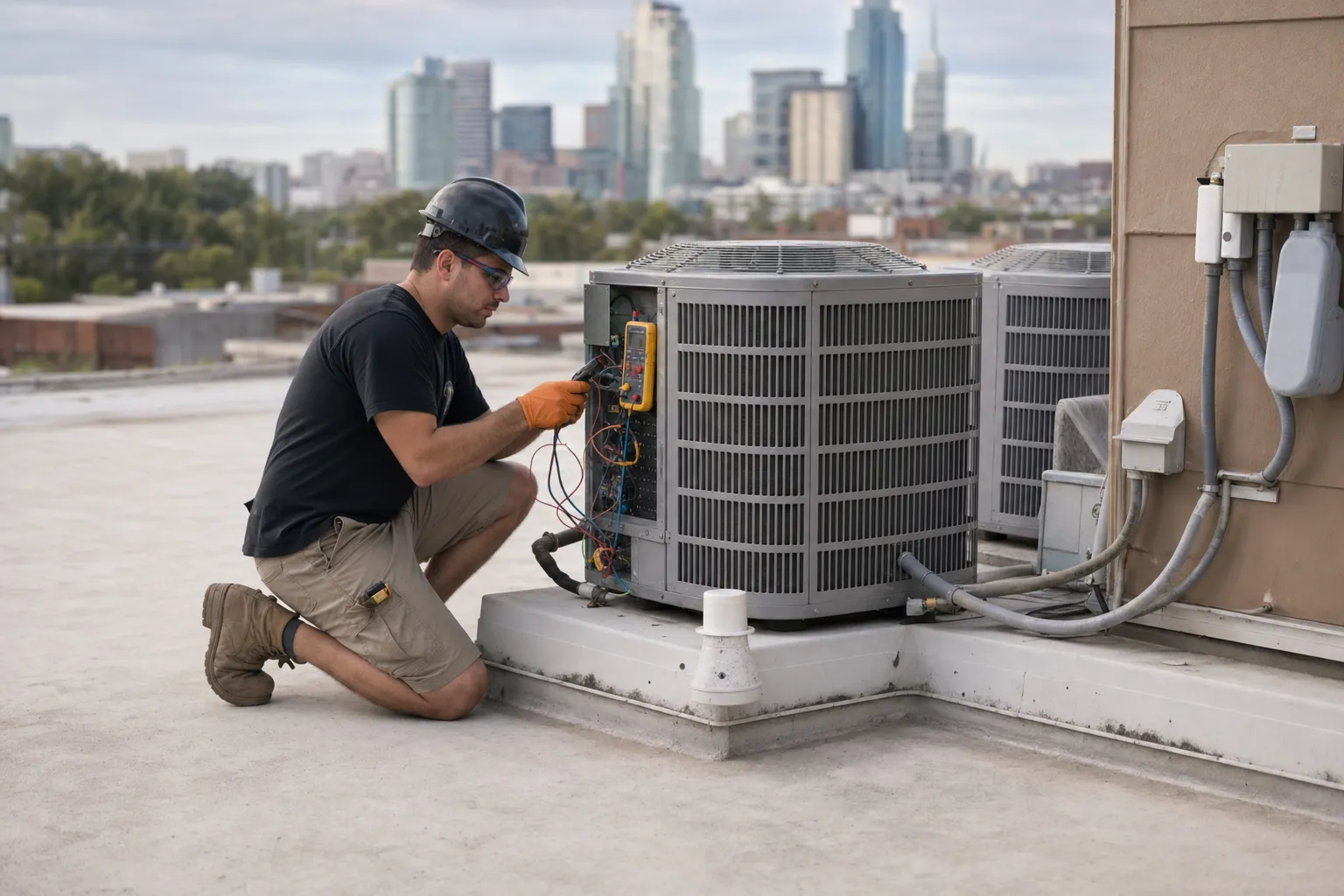
If you want to work on almost any air conditioning or refrigeration system in the country, you need EPA Section 608 certification before you legally handle refrigerant. That single requirement trips up a lot of people getting into HVAC, so here is a clear breakdown of what it is, the four types, how to study, and what you should expect to spend.
HVAC service work covers install, service, refrigeration, and controls. The heat never takes a day off, so neither does the work, and that steady demand is part of why the trade holds up well over a career. But before you touch a system that contains refrigerant, the certification comes first.
What EPA 608 certification actually is
EPA 608 comes from Section 608 of the Clean Air Act. In short, it certifies that a technician is trained to handle refrigerants without venting them into the atmosphere. Because refrigerants are regulated, you are required to hold this certification to purchase, handle, or service equipment that contains them.
This is not a state license and it is not a union card. It is a federal certification, and once you earn it, it does not expire. You pass it once and it stays with you for your entire career, no matter which shop you work for or which part of the country you move to.
The four types of EPA 608 certification
There are four separate certifications under EPA 608, and each one maps to the kind of equipment you are allowed to work on.
- Type I covers small appliances. Think of self-contained systems with a factory-charged, sealed refrigerant amount, such as window units, household refrigerators, and small vending machines.
- Type II covers high-pressure and very-high-pressure appliances. This is the big one for most residential and light commercial techs, since it includes central air conditioning systems, heat pumps, and supermarket refrigeration.
- Type III covers low-pressure appliances. These are typically large chillers found in commercial buildings.
- Universal is not a fifth test. It means you have passed Type I, Type II, and Type III. Earning Universal gives you the broadest ability to work on any system, which is why most techs aim for it.
Before you take any of the type-specific sections, you also complete a Core section that covers the fundamentals of refrigerant handling and environmental rules. You have to pass Core plus at least one type to be certified in that type.
Which type should you get?
If you are new and want the most job options, go for Universal. It signals to employers that you can be put on almost any call. If you know you will only work on window units and small sealed systems, Type I alone may be enough, but most service work involves central systems, which means you need at least Type II. Since Universal simply combines the sections, many people study for all of it at once and take the whole exam in one sitting.
How the exam works
The EPA 608 exam is a multiple-choice test. You take the Core section plus whichever type sections you want to be certified in. To reach Universal, you pass Core, Type I, Type II, and Type III.
A few things worth knowing before you sit down:
- Type I is often offered as an open-book or online proctored option through some providers, while Type II, Type III, and Universal are typically closed-book and proctored in person.
- You need a passing score on each section, and the sections are scored separately. If you pass Core and Type II but not Type III, you keep the ones you passed and only retake what you missed.
- Bring the identification and any materials your testing provider requires. Requirements vary by provider, so read the confirmation carefully.
How to study for EPA 608
Most people who fail the first time underestimate the Core section, not the type sections. Core covers the rules and the science, and that is where the trickier questions live. Here is a study approach that works.
- Get a current study manual. Buy or download a study guide that matches the current exam. The material covers refrigerant types, recovery and recycling, leak repair rules, pressure and temperature relationships, and safety.
- Learn the rules, not just the facts. A lot of Core questions are about what you are and are not allowed to do: recovery requirements, evacuation levels, and record keeping. These are memorization heavy, so flashcards help.
- Take practice tests until you are consistent. Free and paid practice exams mirror the real question style. Aim to pass practice tests comfortably before you schedule the real thing.
- Focus your time by type. If you are going for Universal, spend the most time on Type II, since it has the widest range of equipment and shows up most in daily work.
- Study a little every day. Short, regular sessions beat one long cram session for this kind of rule-based material.
Many trade schools and apprenticeship programs build EPA 608 prep right into their curriculum, and plenty of techs study on their own and pass without a formal class.
What EPA 608 certification costs
The cost is one of the lowest barriers to entry in the trades. Exam fees are generally modest, and the price depends on which provider you use and how many sections you take. Some providers charge a single flat fee for the Universal exam, while others price each section separately. Study guides and practice tests are inexpensive or free.
Because the certification never expires, you pay once and you are done. There is no renewal fee to budget for year after year. Compare that to the ongoing cost of a full state license and it is a small, one-time investment.
How EPA 608 fits into an HVAC career
EPA 608 gets you legally cleared to handle refrigerant, but it is a starting point, not the finish line. Employers still want to see that you can install, service, and troubleshoot. A service tech role in HVAC typically pays in the range of $50K to $95K per year across the country, and that range reflects experience, specialty, and region rather than any single guarantee.
For context on how the trades compare, journeyman electricians commonly land in the $62K to $125K range and journeyman plumbers in the $60K to $130K range nationally. HVAC has a strong floor and steady demand because heating and cooling systems fail year round.
Once you have your EPA 608 in hand, the next step is finding a shop that will put you to work and let you build hours. That is exactly what we do. You tell us what you can do and we get matched with local shops that are hiring, with no cost to you. If you want to understand the process first, here is how HyprStart works. Employers pay a placement fee only when they hire, and the worker never pays anything.
Get the certification, keep learning on the job, and let the steady demand for HVAC work carry your career forward.
Frequently asked questions
Does EPA 608 certification expire?
No. EPA 608 is a one-time federal certification that does not expire. Once you pass, it stays with you for your entire career, in any state and at any shop.
What are the four types of EPA 608 certification?
Type I covers small sealed appliances like window units and refrigerators. Type II covers high-pressure systems like central AC and heat pumps. Type III covers low-pressure systems like large chillers. Universal means you have passed Types I, II, and III together. You also complete a Core section before any type.
Which EPA 608 type should I get first?
If you want the most job options, go for Universal, since it combines all three types and lets you work on almost any system. Most service work involves central systems, so at a minimum you need Type II. Many people study and test for the full Universal exam at once.
How much does the EPA 608 exam cost?
Costs are generally modest and depend on the provider and how many sections you take. Some providers charge a flat fee for the Universal exam while others price each section separately. Study guides and practice tests are inexpensive or free, and there is no renewal fee since the certification does not expire.
How hard is the EPA 608 exam and how do I study?
It is a multiple-choice exam with a Core section plus your chosen types. Many people underestimate Core, which covers refrigerant rules and science. Use a current study manual, learn the regulations with flashcards, and take practice tests until you pass them consistently before scheduling the real exam.
How much do HVAC service techs make?
Nationally, HVAC service techs typically earn in the range of $50K to $95K per year. The actual number depends on experience, specialty, and region. This is a market range, not a guarantee.
Ready to get introduced, not ghosted?
Tell us what you do. We put you in front of local shops that are hiring. Free to apply.
Get matched →