Can You Work in the Trades Without a Driver License? A Straight Answer
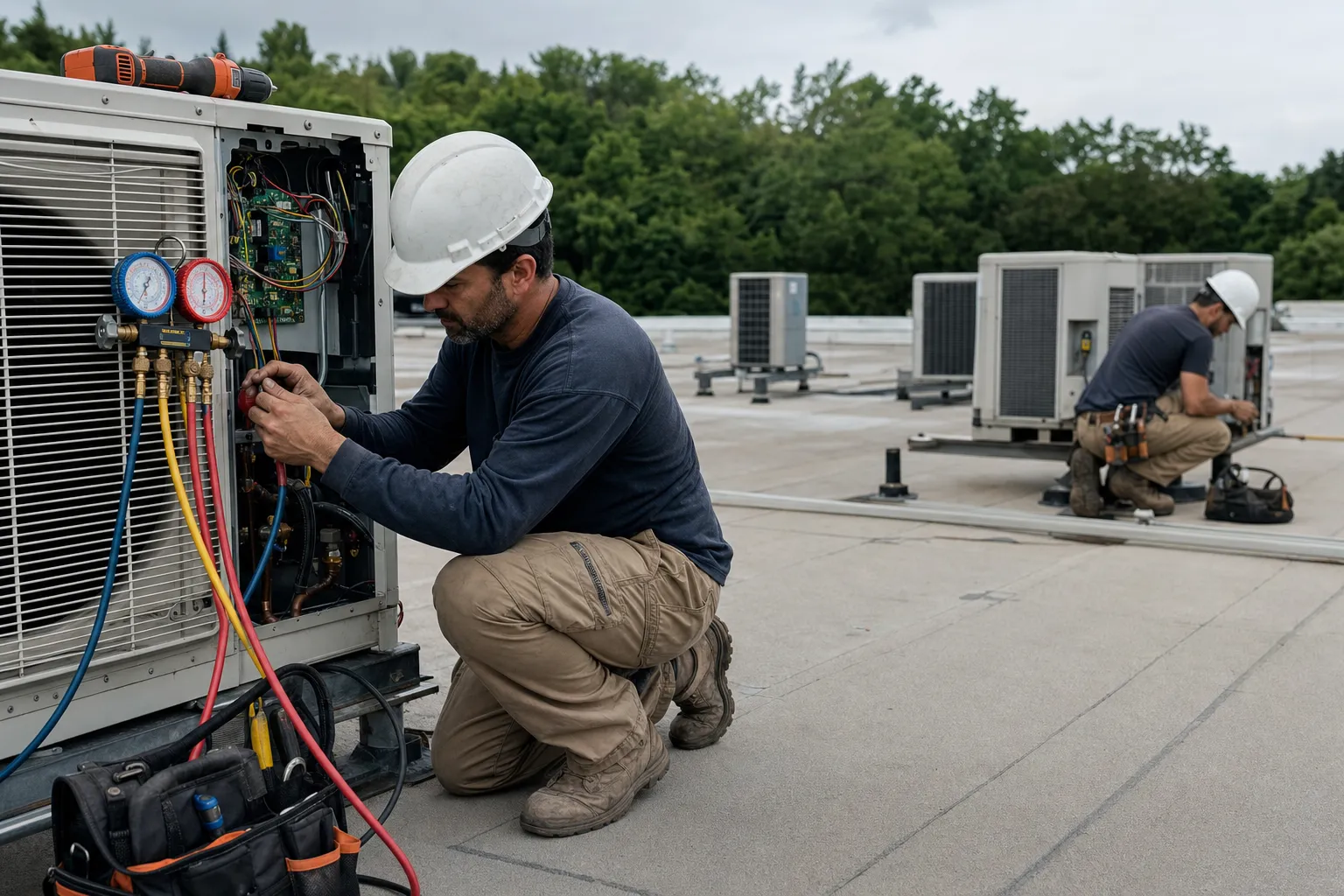
Most job postings in HVAC, electrical, and plumbing list a valid driver license as a requirement, and a lot of them mean it. Service roles send you to a different address every few hours in a company van, so the license is not a formality for those jobs. But that is not the whole picture. There are real paths into the trades without a license, and there are ways to earn one along the way. Here is what is realistic and what is not.
Why so many trades jobs ask for a license
The trades are mobile work. A service tech in HVAC drives to homes and businesses all day. An electrician or plumber on a service crew does the same. When a shop puts you in a company vehicle, their insurance almost always requires a clean, valid license, and that is the part that is hard to negotiate. It is not the shop being difficult. It is their insurer setting the terms.
So the honest starting point is this: if a job description says the role is 90 percent driving to customer sites solo, no license usually means no offer for that specific role. Pretending otherwise wastes your time and theirs.
The roles where it is genuinely realistic
Plenty of trades work does not put you behind the wheel. If you do not have a license, aim at these:
- Shop and fabrication work. Sheet metal fabrication for HVAC, prefab plumbing assemblies, and electrical panel or conduit prep often happen at a fixed shop location. You show up, you build, you go home.
- New construction crews. On a large job site, workers frequently commute to one location for weeks or months at a time. You are not hopping between addresses during the day. A crew lead or foreman drives the truck, and you ride along or arrive on your own.
- Warehouse, parts, and inventory roles inside a trades business. These support the field techs and are a foot in the door.
- Apprentice and helper roles where you are paired with a licensed lead. If the lead drives, you are along for the ride. Many shops accept this for helpers even when the eventual journeyman role will need a license.
The common thread: a fixed job site, or someone else doing the driving. When you apply, say clearly that you are looking for shop-based or single-site work, or a helper role with a driving lead. That framing gets you past the auto-reject a lot faster than staying silent and hoping.
The roles where it is not realistic (yet)
Be honest with yourself about these:
- Solo service tech. HVAC service, electrical service, and plumbing service calls almost always require you to drive the company van alone. Service tech roles in HVAC commonly pay in the $50K-95K per year range nationally, so it is worth working toward, but you generally need the license first.
- Any role advertised as "must have valid driver license and clean record." They mean it. Skip it for now or plan to get licensed before you apply.
The good news is that the higher-paying journeyman roles are a target you grow into, not a wall. Journeyman electricians commonly earn in the $62K-125K per year range, and journeyman plumbers in the $60K-130K per year range nationally. Getting a driver license along the way is one of the smaller obstacles between a helper role and those numbers.
The smart move: start now, get licensed in parallel
Here is the strategy that actually works. Take a shop-based or helper role you can get without a license. Start earning and learning the trade. Then get your driver license while you are employed. Once you have both a license and real field experience, you are eligible for the service and journeyman-track roles that pay more.
This beats waiting until you have a license to even start. Time in the trade counts. A year as a helper plus a fresh license puts you in a stronger position than someone with a license and zero experience.
A few practical notes:
- If you have a license from another state or country, ask shops early whether they accept it or need you to convert it. Rules vary and this is worth clarifying up front.
- If your license is suspended, treat getting it reinstated as part of your job plan. Some shops will hire into a non-driving role and revisit the driving question once you are cleared.
- Reliable transportation to a fixed job site still matters even when you are not driving for work. Have a real answer for how you get to the site on time every day.
How to talk about it with a shop
Do not lead with an apology. Lead with what you can do. A simple version: "I do not currently have a driver license, so I am looking for shop-based work or a helper role where the lead drives. I am working on getting licensed and I have reliable transportation to a fixed site." That is a professional answer. It tells the shop exactly where you fit and shows you understand how the work is structured.
The worst approach is to apply broadly to driving roles, get rejected on repeat, and conclude the trades are closed to you. They are not. You just need to aim at the right openings.
Where HyprStart fits
Instead of guessing which postings are shop-based and which require solo driving, you can tell us your situation once and let us route you to shops that fit. When you get matched with local shops, you can flag that you need non-driving or helper work, and we introduce you to employers in your area who are open to that. Employers pay a placement fee only if they hire you, and you never pay anything. If you want the full breakdown of the process before you start, here is how HyprStart works.
No license today does not mean no trade. It means a narrower list of first jobs and a clear step to take next.
Frequently asked questions
Can I get an HVAC job without a driver license?
You can get shop-based HVAC work like fabrication, or a helper role where a licensed lead drives, without a license. Solo service tech roles almost always require a valid license because you drive a company van between customer sites all day. Service tech pay nationally commonly runs $50K-95K per year, so getting licensed later is worth it.
Which trades jobs do not require driving?
Shop and fabrication work, new construction crews at a single job site, parts and inventory roles inside a trades business, and apprentice or helper roles paired with a lead who drives. The common thread is a fixed location or someone else handling the driving.
Why do so many trades postings require a driver license?
Because service work is mobile. When a shop puts you in a company vehicle, their insurance almost always requires a valid, clean license. That requirement comes from the insurer, not the shop being difficult, which is why it is hard to negotiate for driving roles.
Should I wait until I have a license to apply for trades work?
No. The stronger move is to take a shop-based or helper role now, start earning and learning, and get your license in parallel. Time in the trade counts. A year of experience plus a fresh license beats a license with no experience when you go for higher-paying roles.
How much more can I earn once I have a license and experience?
Licensed, experienced journeyman roles pay well nationally. Journeyman electricians commonly earn $62K-125K per year and journeyman plumbers $60K-130K per year. These are market ranges, not guarantees, but they show why growing into a driving role is worth the effort.
How do I bring up not having a license with an employer?
Lead with what you can do. Say you are looking for shop-based work or a helper role where the lead drives, that you are working on getting licensed, and that you have reliable transportation to a fixed site. That professional framing helps a shop place you correctly instead of auto-rejecting your application.
Ready to get introduced, not ghosted?
Tell us what you do. We put you in front of local shops that are hiring. Free to apply.
Get matched →