Breaking Into HVAC in the Bay Area: Pay, Certs, and How to Start
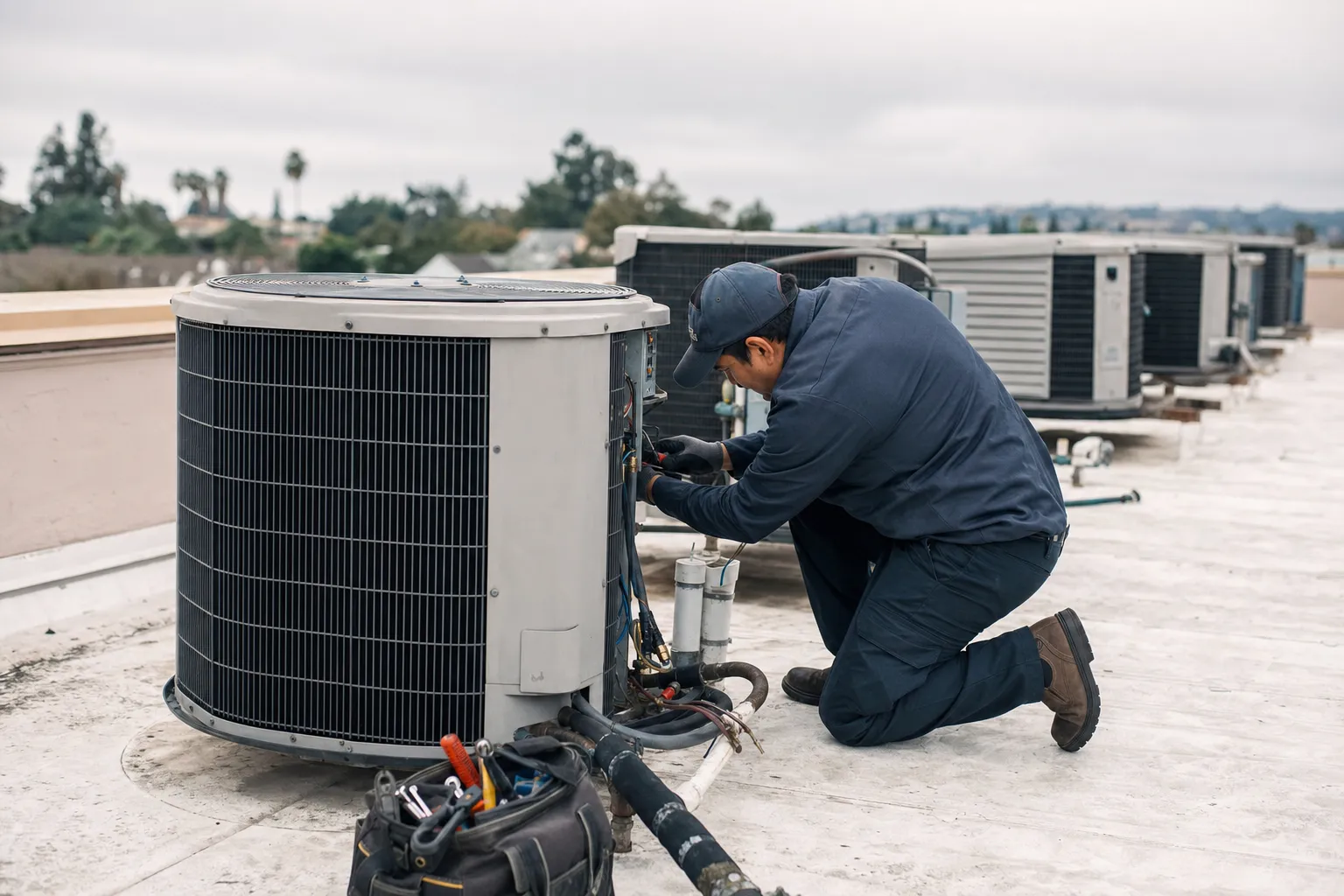
HVAC work in the Bay Area runs year-round, and the region's high cost of living pushes pay up to match. Skilled techs are scarce here, so shops end up competing for them. That combination is good news if you are thinking about getting into the trade: demand is steady, and there is real room to move up.
This guide covers what the work pays, what license or certification you actually need to start, and the practical steps to break in.
What HVAC pays in the Bay Area
Pay in this trade tracks closely with your role and experience. Here are the market ranges for the area:
- Install tech: $55K to $72K per year, roughly $26 to $35 an hour. This is where most people start.
- Service tech: $70K to $95K per year, roughly $34 to $46 an hour. This is diagnostic and repair work, and it is the typical pay level for the trade in the region.
- Lead or senior tech: $100K and up, roughly $48 an hour and higher, for people running jobs and handling the most complex work.
The typical figure for a working tech in the Bay Area lands around $70K to $95K a year. These are market ranges, not a HyprStart offer or a guarantee. What a specific shop pays depends on your experience, your certifications, and how busy they are.
The path from install to service to lead is the most common way pay climbs. Install work teaches you the equipment and the fundamentals. Service work builds the diagnostic skill that shops pay a premium for. Lead roles reward the people who can run a job and mentor others.
Do you need a license to work HVAC in the Bay Area?
This is the question that stops a lot of people before they start, and the answer is more open than most expect.
You do not need a contractor license to work as an HVAC employee in California. The state's CSLB C-20 license applies to contractors, meaning the business that bids and takes on jobs. If you are working as a tech on a shop's payroll, you can do the work without holding a C-20 yourself.
The EPA 608 certification is the one people ask about most. It covers handling refrigerants. It helps to have it, but it is not required to get hired. Many Bay Area shops will hire you and certify you on the job. So a missing 608 is not a reason to hold off on applying.
In short:
- EPA 608: Helpful, not required. Many shops certify you after you start.
- CSLB C-20: For contractors, not techs. You can work as an employee without one.
That means the real barrier to entry is lower than the licensing chatter online suggests. If you are willing to learn and show up, shops in the area have a reason to bring you on and train you.
How to break into HVAC here
If you are starting from zero or coming from another trade, here is a realistic path.
1. Decide where you fit
Most people enter as an install tech. It is physical, hands-on, and it teaches you how systems go together. If you already have mechanical or electrical experience, you may be able to move toward service work faster. Be honest about what you can do now, because that is what shops are matching against.
2. Get the basics down
You do not need a degree. Basic hand tool skills, comfort on a ladder, and a willingness to learn the equipment go a long way for an install role. If you can get the EPA 608 on your own, it is a nice signal, but do not treat it as a gate. Plenty of shops certify their new hires.
3. Get in front of shops that are hiring
The hard part is usually not qualifying, it is connecting with the right shops at the right time. Because techs are scarce here, employers are actively looking, but finding which ones are hiring this month takes legwork.
That is where HyprStart comes in. You tell us what you do, and we introduce you straight to local shops that are hiring. The employer pays a placement fee only if they hire you. You never pay anything. You can get matched with local shops and skip the cold applications.
If you want to see what roles look like in the region first, browse current HVAC jobs in Bay Area to get a feel for what shops are asking for.
4. Plan your climb
Once you are in, think about the move from install to service. Service techs earn meaningfully more, and the diagnostic skill you build makes you harder to replace. Lead roles follow from there. The pay ladder in this trade rewards people who keep learning.
Why the Bay Area is a strong market for this trade
Two things make this region worth considering for HVAC work.
First, demand does not slow down. Work runs year-round rather than clustering into one busy season, which means steadier hours and steadier pay.
Second, the cost of living pushes wages high, and the shortage of skilled techs means shops compete for the people who can do the work. That competition is what puts service techs in the $70K to $95K range and lead techs past $100K.
For someone deciding whether to invest the time to learn the trade, that steady demand plus the low licensing barrier makes the Bay Area one of the more approachable places to start.
Frequently asked questions
Do I need an EPA 608 certification to get an HVAC job in the Bay Area?
It helps but it is not required. Many Bay Area shops will hire you and certify you on the job, so a missing 608 is not a reason to wait to apply.
Do I need a C-20 license to work as an HVAC tech in California?
No. The CSLB C-20 license applies to contractors, not techs. You can work as an employee without one.
How much do HVAC techs make in the Bay Area?
Market ranges run about $55K to $72K a year for install techs, $70K to $95K for service techs, and $100K and up for lead or senior techs. The typical working tech lands around $70K to $95K a year.
What HVAC role should I start in?
Most people start as an install tech, earning roughly $55K to $72K a year, which teaches the equipment and fundamentals. From there you can move into service work, which pays more, and then into lead roles.
Why is HVAC work in demand in the Bay Area?
Demand runs year-round and the high cost of living pushes pay up. Skilled techs are scarce, so shops compete for them, which keeps hiring active.
How does HyprStart work for HVAC job seekers?
You tell HyprStart what you do, and we introduce you straight to local shops that are hiring. The employer pays a placement fee only if they hire you, and the worker never pays anything.
Ready to get introduced, not ghosted?
Tell us what you do. We put you in front of local shops that are hiring. Free to apply.
Get matched →